
Overview
Willemstad is a city of 125,000 people on the island of Curaçao, positioned at the crossroads of trade routes in the southern reaches of the archipelago. The city serves as the commercial and cultural heart of the island, with a deep-water harbour that has shaped its character for centuries. Dutch is the official language, and the local currency is the guilder.
What sets Willemstad apart is its geography and strategic importance. The city's position has made it a significant port, and its waterfront remains the focal point for both residents and visitors. The layout of the city reflects layers of history, with the harbour acting as the spine around which daily life revolves.
Key facts
| Country | Curacao |
|---|---|
| Population | 125,000 |
| Timezone | America/Curacao |
| Nearest airport | Hato International Airport (CUR), 11 km |
| Currency | XCG |
Geography and Layout
Willemstad occupies a coastal position with a deep natural harbour at its centre. This water body divides the city into distinct areas on either side, with ferry connections linking the neighbourhoods across the channel. The harbour remains the most distinctive feature of the urban landscape, framing views throughout the city and serving as the primary gathering point.
The city is relatively compact, making it accessible on foot, though the terrain and distances require some planning. The waterfront promenade provides the clearest orientation for navigating between different sections. Most commercial and cultural activity clusters around the harbour, with residential areas spreading outward from this core.


Getting There
Hato International Airport is the primary gateway, located just 10.9 kilometres from the city centre. This airport handles most international flights and is the most convenient arrival point. A second option, Flamingo International Airport, lies 67.2 kilometres away on a neighbouring island and serves as a secondary point of entry. A third airport, José Leonardo Chirinos Airport, is 116.9 kilometres distant.
From Hato International Airport, ground transport options will get you into the city within twenty minutes under normal traffic conditions. The airport is well-connected by road, and arrangements can be made in advance or on arrival. Direct transfers are the most straightforward approach for first-time visitors.
Flights from £744 to Willemstad →from London · arrives CUR (10.9 km away) · recently-found fare — price & availability change

Getting Around
The city centre is navigable on foot, particularly around the harbour and main commercial streets. This pedestrian approach reveals the finest architectural details and allows unhurried observation of daily street life. Walking also provides the best sense of the city's scale and interconnected layout.
For longer distances or visits beyond the immediate centre, public transport and taxis are available. The harbour-side location makes the waterfront the natural starting point for any exploration. Orientation around the water is straightforward, and from there the city unfolds in comprehensible directions.

History and Character
The city's identity is inseparable from its role as a working port. The harbour has been the engine of economic activity and cultural exchange across centuries, drawing traders, settlers, and merchants from multiple continents. This maritime heritage remains visible in the built environment and in the rhythms of daily life.
The architecture reflects the accumulated influence of multiple cultures and building traditions, visible in the structures that line the waterfront and main streets. These buildings, many painted in characteristic hues, tell the story of the city's commercial importance and its position within wider trading networks. The streetscape is a record of successive adaptations and priorities, from practical dock facilities to residential quarters to modern commercial space.
Walking through the city reveals how different eras have layered upon one another. Narrow streets in some quarters contrast with broader thoroughfares designed for modern traffic. The ground floors of buildings often house shops and businesses, while upper storeys served as homes and offices. This mixed-use character remains the defining feature of the urban experience.

When to Visit
Willemstad is a year-round destination without significant seasonal closures or unreliable weather patterns that would restrict travel. The city functions normally throughout the calendar, with residents and businesses maintaining regular schedules. This consistency makes it possible to visit at almost any time and experience the authentic rhythm of city life.
The working harbour means that maritime activity continues throughout the year, with cargo vessels, ferries, and commercial traffic providing the visual backdrop of the waterfront. This constant activity is part of the city's character rather than a seasonal occurrence. Planning a visit does not require careful timing around weather or seasonal events; practical considerations like personal preference for crowd levels or particular purposes are more relevant to the choice.

Walking and Exploration
The harbour walk is the essential orientation to the city. Following the waterfront reveals how the urban layout organises itself around this central feature. The promenade offers views across the water to the opposite shore and provides a complete circuit of the working harbour, with ferries, fishing vessels, and cargo ships constantly moving.
The streets extending back from the waterfront contain the commercial heart of the city, with shops, restaurants, and offices housed in multi-storey buildings that date from various eras. Walking these streets on foot reveals architectural detail that is invisible from vehicles: distinctive doorways, window treatments, shopfront designs, and the wear patterns that show where foot traffic is heaviest.
The city rewards wandering. Secondary streets lead to quieter residential areas where the pace slows and street-level activity reflects everyday neighbourhood life rather than commerce. The human scale of most streets makes it easy to pause, observe, and move at your own rhythm. This accessibility is one of the great advantages of visiting a compact urban centre.

Practical Essentials
The official language is Dutch, though you will encounter English in tourist-facing contexts. Having a few phrases of Dutch is helpful for small interactions and shows respect to residents. Translation apps or a pocket phrasebook can assist in basic communication, though many younger residents and service workers have English abilities.
The local currency is the guilder, abbreviated as XCG. Exchange facilities are available throughout the city, and major cards are accepted in most commercial establishments. It is wise to carry some local currency for smaller transactions, particularly in markets or informal vendors.
The city operates on standard central time. Standard electrical voltage and plug types used locally should be checked before arrival if you are bringing electronics. Tap water is generally safe, though many residents and visitors prefer bottled water.

Day Trips from Willemstad
Bandariba, a town 6.9 kilometres from the city, offers an accessible excursion from central Willemstad. The short distance makes it feasible as a half-day trip or as an addition to a morning or afternoon of city exploration. Road connections are straightforward, and the journey itself provides views of the surrounding area beyond the urban centre.
A trip to Bandariba allows comparison between the regional town character and the urban density of Willemstad itself. The contrast illustrates how settlement and commerce are organised at different scales across the island. Returning to the city in the afternoon allows for evening waterfront time or dinner in the commercial quarters.

Accommodation and Dining
The city centre contains hotels, guesthouses, and rental apartments suited to various budgets and preferences. Waterfront locations offer the advantage of immediate access to the harbour walks and main attractions. Residential neighbourhoods slightly removed from the commercial core provide quieter settings while remaining within walking distance of main activity areas.
Eating in Willemstad reflects the city's role as a cosmopolitan port. Restaurants, cafés, and food vendors operate throughout the commercial streets and around the harbour. The range reflects the multicultural character of the city and the availability of ingredients from various sources. Street-level dining and casual spots are plentiful alongside more formal establishments.
Hotels are booked on Booking.com (a third party, off this page). You book and pay them directly — Head Your Way is not the seller.

Experiences you can book in Willemstad
 Sea TREK Curaçao: Underwater Helmet Walk, No Swimming RequiredFree cancellationInstant confirmation
About this experience
Sea TREK gives non-swimmers and first-time underwater explorers a comfortable way to walk on the ocean floor. The custom helmet provides a continuous flow of fresh air, so you breathe normally without a mouthpiece or scuba tank while keeping your face and hair dry. Glasses and…
from £112.85Book on Viator →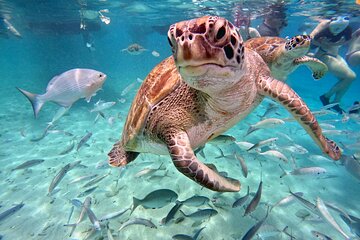 Unforgettable Sea Turtle Swim & Grote Knip Beach incl. Pick upFree cancellationInstant confirmation
About this experience
We offer our guests a prosperous and relaxing trip. Swimming with the sea turtles with good conscience without touching and feeding. At Turtle Beach we have our own private roof top, just for our guests. 1 hour swimming with sea turtles and your guide Patrick. More time in the…
from £74.48Book on Viator → Best Highlight Island Tour - Perfect Day Tour. Small group TourFree cancellationInstant confirmation
About this experience
Perfect Day Tour - OUR BEST TOUR. • Pick up from the hotel/ship. First stop will be the Flamingo area. There after we will visit the Shete Boka National Park. At the next stop, we are going to snorkel with the turtles. You can take picture and/or film them. To relax after the…
from £89.53Book on Viator → TukTuk’s Adventure Fun Tour in CuraçaoFree cancellationInstant confirmation
About this experience
Our tour is not just like any common tour we introduced this unique vehicles so we can add some fun, adventure and excitements to your short visit to our Island. It’s a guided tour with a professional guide leading the way and gives you a complete overview thru out the way. Sit…
from £39.12Book on Viator → Curacao Clear Kayak Photoshoot + FREE Videoshoot,Cocktails,Shots!Free cancellationInstant confirmation
About this experience
Create beautiful memories in Curaçao! Book a clear kayak photoshoot you’ll never forget ✨ Enjoy free cocktails & shots, choose from multiple clear kayak packages, and for couples—floating dress + flower décor. Enjoy the real authentic side of Curacao! Music , Beautiful Pics and…
from £94.04Book on Viator → The Curacao Full Day Private Tour ExperienceFree cancellation
About this experience
All tours are custom made depending on the preference of each group. From island tour, beach hopping to nature tours or even visiting caves and lots more. A combination of these is also possible. So just let us know your lifestyle and we will create a tailored tour to your…
from £116.62Book on Viator →
Experiences are sold and operated by Viator and its local suppliers. Head Your Way is an affiliate: we may earn a commission, but your booking, payment, cancellations, refunds and any insurance are handled entirely by Viator under their terms. Head Your Way is not the seller and is not a party to your booking. Prices and availability shown are from Viator and can change — confirm full details on Viator before booking.
Getting around Willemstad
Affiliate links — we may earn a commission, never at extra cost to you.
Common questions
- Do I need to speak Dutch to visit Willemstad?
- Dutch is the official language, but English is increasingly common in tourist areas, hotels, and shops. Having a translation app or basic phrases is helpful, though not essential. Many younger residents and service workers speak English.
- What currency should I use?
- The local currency is the guilder (XCG). Exchange facilities and ATMs are available throughout the city, and major credit cards are accepted in most shops and restaurants.
- Is it safe to walk around the city?
- The city centre is walkable and the harbour areas are regularly frequented by residents and visitors. As with any urban area, standard travel caution applies—keep valuables secure and be aware of your surroundings, particularly after dark in quieter streets.
- How far is the airport from the city?
- Hato International Airport, the main gateway, is 10.9 kilometres from the city centre and can be reached in about twenty minutes by ground transport under normal conditions.
- Can I visit Willemstad year-round?
- Yes. The city functions normally throughout the year without significant seasonal closures or extreme weather disruptions that would restrict travel.
- What is the best way to explore the city?
- Walking is the best approach. The harbour walk provides natural orientation, and the compact city centre is accessible on foot. The waterfront is the focal point for understanding the city's layout and character.
On the map
Keep exploring
Similar destinations
Plan the wider trip
Sources & method
- GeoNames — population · retrieved 2026-08-14
- OurAirports (derived) — nearestAirports · retrieved 2026-08-14
- Imagery — commons
Data compiled 2026-08-14 · editorial checks: passed. See our methodology for how Head Your Way sources and reviews travel data.