
Overview
Nicosia is the capital of Cyprus and the only European capital divided by a border. With a population of over 200,000, it sprawls across 51 square kilometres in the Nicosia District, serving as the island's cultural and administrative heart. The city straddles two communities and two histories, creating a complex urban landscape where medieval walls, Ottoman mosques, Venetian architecture and modern institutions coexist.
The city's strategic position in the centre of Cyprus has made it a crossroads for millennia. Today, Nicosia remains divided, with distinct Greek and Turkish Cypriot quarters that reflect different histories and sensibilities. Despite the partition, the old walled city retains remarkable character, while newer neighbourhoods sprawl outward with contemporary shops, galleries and restaurants.
Key facts
| Country | Cyprus |
|---|---|
| Population | 200,452 |
| Timezone | Asia/Nicosia |
| Nearest airport | Ercan International Airport (ECN), 14 km |
| Currency | EUR |
History and context
Nicosia's layered past is written into its streets and buildings. During the ancient era, the city was a significant settlement, though little from that period survives above ground. The early Christian period left its mark with religious architecture that remains in use today. Medieval times brought substantial development under the Lusignan dynasty, who established the city as a major centre and constructed many of the churches that still dominate the skyline.
The Venetian era fortified Nicosia with the distinctive walls that encircle the old town to this day. These walls represent a major defensive engineering achievement of the Renaissance period, designed in a geometric star pattern that is still visible from above. The Ottoman conquest followed, bringing new religious buildings, administrative structures and a different cultural character to the city.
The modern era has been defined by the division of the island, which created a physical and psychological split through Nicosia itself. This remains the city's defining characteristic and shapes how residents and visitors experience the urban landscape. The old walled city, though less prosperous than it once was, retains exceptional historical density, while contemporary Nicosia has developed outward into residential and commercial zones.


Things to do
The Cyprus Museum ranks among the city's most significant institutions, holding collections that span the island's long history from ancient to medieval periods. This is the primary repository for understanding Cyprus's archaeological heritage and provides essential context for exploring the island's past. A visit here grounds understanding of the city and island.
The old walled city contains the highest concentration of historical sites. The Venetian walls of Nicosia form a complete circuit around the medieval core, their distinctive star-shaped bastions still clearly visible. Walking along or around these walls provides orientation and perspective on the city's urban structure. Within the walls lie several major religious buildings: the Church of the Holy Cross and Notre Dame de Tyre represent medieval Christian architecture, while Omeriye Mosque, Turunçlu Mosque and the New Mosque reflect Ottoman religious life. The Catacomb of Phaneromeni Church, with underground chambers, offers a different kind of historical experience. St. John Theologian's Cathedral stands as a significant medieval ecclesiastical structure.
The Dervish Pasha Mansion, housed in a restored Ottoman-era building, functions as a museum interpreting local domestic life from an earlier period. Similarly, the Mevlevi Tekke Museum occupies a space devoted to Ottoman Sufi spiritual tradition. The Lusignan House provides insight into medieval residential architecture and living arrangements. These three sites together illustrate how daily life was lived across different historical periods and communities.
Squares and civic spaces anchor the contemporary city. Eleftheria Square, the main public space, serves as the social and commercial heart of central Nicosia. Solomos Square offers another important gathering point. Tower 25, visible across much of the city, provides an unusual vantage point from which to survey the urban landscape.
For those interested in transport and mechanical history, the Cyprus Classic Motorcycle Museum offers a specialist collection. The city also has sports venues including GSP Stadium and Nicosia Atatürk Stadium for those interested in local sporting culture. The Cyprus Library provides access to texts and research resources. The municipal gardens offer green space and respite within the urban environment.
Religious sites across the city reflect its layered religious history. Beyond those in the walled old town, Akkavuk Masjid represents Islamic worship in other neighbourhoods. The Church of Cyprus and other Christian sites are scattered across different areas, demonstrating how faith communities have lived throughout the city over time.


Experiences you can book in Nicosia
 NORTHERN CYPRUS ALL-IN-ONE Private Day Trip from NicosiaInstant confirmation
About this experience
Take the opportunity to explore three major cities (Famagusta, Kyrenia, and Nicosia) in the northern part of Cyprus with this full-day sightseeing tour, led by a professional licensed guide. Explore magnificent historical sites ranging from the Ancient City of Salamis and the…
from £170.38Book on Viator → Ancient City Of PAPHOSFree cancellation
About this experience
* Drive from Nicosia to Paphos * Stop at Petrou To Romiou ( Birth place of Aphrodite) *Visit Paphos Castle * Walk in the harbor and free time for shopping and lunch * Visit Chrystopolitisa Church * Visit Tombs of The Kings
from £419.41Book on Viator → From Nicosia, Kyrenia & Famagusta- 3 Cities in oneday TourFree cancellationInstant confirmation
About this experience
Save your time to visit all main sites with Lunch on the same day with a licensed and a local guide. All in one day tour provides a great opportunity to those to have limited time in Cyprus. *Explore Northern Cyprus with a professional guide Lunch and entry fees are included in…
from £155Book on Viator →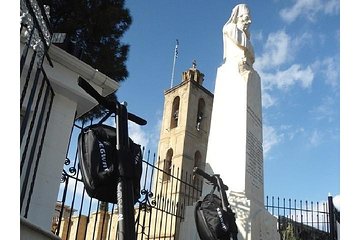 3-hour Nicosia Segway TourFree cancellation
About this experience
Segway Station was set up to bring the Segway tour experience to Nicosia. It is located at the corner of Aeschylou Street and a small, quaint walking street which includes a coffee shop, a bar and various craft shops. At Segway Station you can find a relaxing cafe/lounge area…
from £51.25Book on Viator → A Day Trip to Medieval FAMAGUSTA (Kyrenia, Nicosia or Famagusta )Instant confirmation
About this experience
Today we will be visiting the east of Cyprus. We have many sights in our program as Famagusta is one of the historical cities to be seen on a limited time while in Cyprus. St. Barnabas Monastery will be our first stop of the day. When he came back to Cyprus and while spreading…
from £262.13Book on Viator → Nicosia Green Line and Buffer Zone Guided WalkFree cancellationInstant confirmation
About this experience
I love nothing more than sharing the sights, sounds and secrets with intimate knowledge of the best places off the beaten path, on streets rarely discovered. I've been leading recreational walks for many years, purely out of interest and passion for my city. I enjoy connecting…
from £60.29Book on Viator →
Experiences are sold and operated by Viator and its local suppliers. Head Your Way is an affiliate: we may earn a commission, but your booking, payment, cancellations, refunds and any insurance are handled entirely by Viator under their terms. Head Your Way is not the seller and is not a party to your booking. Prices and availability shown are from Viator and can change — confirm full details on Viator before booking.
Neighbourhoods to explore
The walled old town remains the historical core, divided into Greek and Turkish Cypriot quarters by the dividing line. This area contains the highest density of medieval and Ottoman architecture and is most walkable on foot. Streets are narrow and often congested with both traffic and pedestrians, requiring patience but rewarding with architectural detail at every turn.
Yenişehir, located to the north, represents a different urban character—a planned neighbourhood with broader streets and modern infrastructure reflecting 20th-century Turkish Cypriot urban planning. Arab Ahmet and Ak Kavuk are established residential areas with their own commercial strips and community character. Haydar Pasha offers another distinct neighbourhood with local services and residential character.
Egkomi Lefkosias and Aglantzia are more contemporary Greek Cypriot neighbourhoods developed away from the old town, with wider streets and modern amenities. These areas house much of the city's retail and dining life. Agios Dometios, Trachonas, and Agios Andreas represent further suburban expansion where residents have chosen to settle away from the urban core.
Stróvolos, only 3.3 kilometres from the city centre, functions as an immediate satellite town within easy reach. Its proximity makes it accessible for those interested in exploring beyond central Nicosia while remaining within the greater metropolitan area.

Getting there
Ercan International Airport lies 14.1 kilometres north of Nicosia, making it the closest airport by distance. International flights connect this airport to various destinations, though visitors should verify current routing and service availability given Cyprus's political situation.
Larnaca International Airport, situated 41.3 kilometres south, is the island's primary international hub with more extensive flight connections globally. From Larnaca, reaching Nicosia involves ground transport—hire cars, coaches or taxis are the main options. The journey takes approximately 45 minutes to an hour depending on traffic and the specific destination within the city.
For those already on the island, Nicosia is centrally located and accessible from coastal cities. Kyrenia lies 18.5 kilometres to the north, Famagusta 53.7 kilometres to the east, and Larnaca 37.4 kilometres to the south. All are reachable by car within an hour.
Flights from £182 to Nicosia →from London · arrives ECN (14.1 km away) · recently-found fare — price & availability change

Getting around
The old walled city is best explored on foot, with narrow medieval streets unsuitable for comfortable car navigation. Walking allows proper engagement with architectural detail and street-level life. Distances within the old town are manageable for anyone with reasonable mobility.
For exploring beyond the old centre or visiting neighbourhoods further afield, a hire car offers flexibility and independence. Traffic can be heavy during peak hours, particularly on routes connecting the city's main arteries. Parking within central Nicosia can be challenging, with both street parking and car parks available at varying levels of convenience and cost.
Local buses operate within the city and to surrounding towns, offering an economical option for those without hire cars. Taxis are available for point-to-point journeys, though agreeing fares in advance is advisable. The city's elevation and layout mean that certain routes involve hills, relevant for those with mobility considerations.

Day trips from Nicosia
Kyrenia, 18.5 kilometres north, is the closest significant destination and accessible for a half-day excursion. This coastal town offers a marked contrast to the inland capital, with harbour-front restaurants and a different atmosphere.
Famagusta, 53.7 kilometres east, is reachable as a day trip for those interested in exploring another major city with distinct history and character. The journey takes roughly an hour by car.
Larnaca, 37.4 kilometres south, is Cyprus's largest coastal resort and provides beaches, seafront dining and a different urban experience. The drive takes under an hour. Aradíppou, 32.9 kilometres south, offers a smaller-scale alternative in the same direction.
Limassol, 61.5 kilometres south-west, is the second-largest city on the island and another major destination with beaches, dining and entertainment. Paphos, 95.5 kilometres further west, combines archaeology, beaches and wine country but requires a longer commitment. Both reward a full day or overnight stay rather than a rushed day trip.
Stróvolos and Káto Lakatámeia, at 3.3 and 6.7 kilometres respectively, are immediate satellite towns useful for shopping, dining or specific attractions but lack the character of more distant destinations. These serve better as extensions of Nicosia rather than alternative trips.

When to visit
Nicosia's Mediterranean interior location means hot, dry summers and mild, occasionally wet winters. The city's position away from the coast means it experiences temperature extremes more intensely than coastal areas, with summer heat concentrated in the urban environment without sea breezes.
Spring and autumn offer the most comfortable climate for walking the walled old town and exploring on foot. During these seasons, temperatures are moderate and sunshine abundant. Winter is mild and suitable for visiting, though occasional rain can disrupt plans. Some historical sites may have variable opening arrangements during off-season months.
Summer is intensely hot, making daytime exploration of the old town challenging without frequent breaks for shade and refreshment. Early morning or late evening walks are more pleasant. Many locals retreat indoors or to cafés during peak afternoon hours. Those accustomed to heat will manage better than others.
Religious observances and cultural events vary by calendar—both Eastern Orthodox and Islamic traditions are observed, with festivals and celebrations following those calendars. The divided nature of the city means that different communities observe holidays on different dates. Visiting during a local celebration can be rewarding, though advance research is essential as exact dates vary annually.

Good to know
Nicosia is divided, with a United Nations buffer zone running through the city. The border between north and south is a physical reality affecting movement within the city and access to different areas. Visitors should understand that crossing between communities is possible only at specific checkpoints with appropriate documents. The political context shapes many aspects of daily life and urban experience; respectful awareness is essential.
Two languages are spoken: Greek in the south and Turkish in the north. English is widely understood in tourist areas, hotels, restaurants and major attractions. Learning basic greetings in both languages is courteous and often appreciated.
Currency in the Republic of Cyprus (the internationally recognised government controlling the south) is the euro. North Cyprus uses the Turkish lira, though euros are often accepted in border areas and tourist zones. Exchanging money or paying by card may require awareness of which currency and system applies in each area.
The divided city means that some historical sites may be in areas less frequently visited by tourists, requiring specific planning to access. Walking the streets of both communities provides perspective on the island's division and recent history, but visitors should be aware that political sensitivities exist and respectful behaviour is important.
Accommodation, dining and shopping are concentrated in specific zones. The old town has both tourist infrastructure and local establishments; exploring beyond main tourist streets reveals neighbourhood life. Newer neighbourhoods like Aglantzia and Egkomi Lefkosias have more contemporary restaurants, shops and entertainment, while the old centre retains character and history.
Where to stay in Nicosia
Hotels are booked on Booking.com (a third party, off this page). You book and pay them directly — Head Your Way is not the seller.
Getting around Nicosia
Affiliate links — we may earn a commission, never at extra cost to you.
Common questions
- Can I cross between the Greek and Turkish Cypriot areas of Nicosia?
- Yes, but only at designated checkpoints with appropriate travel documents. The city is divided by a United Nations buffer zone, and movement between the two communities is restricted to specific crossing points. Visitors should carry valid identification and be aware that the crossing is a real border controlled by both sides.
- What language is spoken in Nicosia?
- Greek is spoken in the south and Turkish in the north. English is widely understood in tourist areas, hotels, restaurants and major attractions, though learning basic phrases in the local language is courteous and often appreciated.
- Which airport should I fly into for Nicosia?
- Larnaca International Airport, 41.3 kilometres south, is the island's main international hub with the most flight connections. Ercan International Airport is closer at 14.1 kilometres north, but has fewer international routes. From Larnaca, ground transport to Nicosia takes approximately 45 minutes to an hour.
- Is the old walled city walkable?
- Yes, the old walled city within the Venetian walls is best explored on foot. Medieval streets are narrow and unsuitable for comfortable car navigation, and distances are manageable. Spring and autumn offer the most pleasant walking conditions; summer heat can be intense in the urban environment.
- What currency is used in Nicosia?
- The euro is used in the southern, internationally recognised area controlled by the Republic of Cyprus. The northern area uses the Turkish lira, though euros are often accepted in border areas and tourist zones. Visitors should clarify which currency applies in their specific location.
- How far is Kyrenia from Nicosia?
- Kyrenia is 18.5 kilometres north of Nicosia and accessible as a half-day or day trip by car, taking roughly 30 minutes. It offers a coastal alternative to the inland capital with harbour-front dining and a different atmosphere.
On the map
Keep exploring
Nearby places
Similar destinations
Plan the wider trip
Sources & method
- GeoNames — population · retrieved 2026-08-14
- OurAirports (derived) — nearestAirports · retrieved 2026-08-14
- Imagery — commons
Data compiled 2026-08-14 · editorial checks: passed. See our methodology for how Head Your Way sources and reviews travel data.