
Overview
Florence is a UNESCO World Heritage city in central Italy, with a population of 367,150 and an elevation of just 50 metres. The city sprawls across 102 square kilometres and stands as one of Europe's most significant cultural destinations, shaped by centuries of artistic and intellectual achievement. Italian is the primary language, though German and French are also spoken; the local timezone is Europe/Rome and currency is the Euro.
The city's character is defined by its architectural heritage, museum collections, and role as a centre of learning and artistic patronage. Visitors encounter Renaissance palaces, religious buildings of profound historical weight, and galleries holding works of exceptional artistic merit. The surrounding region offers equally compelling destinations for day trips, making Florence an ideal base for exploring central Italy.
Key facts
| Country | Italy |
|---|---|
| Population | 367,150 |
| Timezone | Europe/Rome |
| Elevation | 50 m |
| Nearest airport | Florence Airport, Peretola (FLR), 5 km |
| Currency | EUR |
History and context
Florence's origins lie in the ancient era, when settlements emerged in what would become a strategically important crossing point. During the imperial period, the city developed as a significant administrative centre, a status that would shape its future prominence.
The early Christian era brought religious institutions that would define the city's spiritual character for centuries. Medieval Florence consolidated its power through commerce and banking, establishing trade networks that extended across Europe and the Mediterranean. The city's merchant families accumulated vast wealth, which they channelled into patronage of artists, architects, and scholars.
The Renaissance marked Florence's moment as the epicentre of artistic and intellectual rebirth in Europe. The concentration of talent, resources, and ambitious patrons created conditions for unprecedented creative flourishing. This era produced innovations in art, architecture, science, and philosophy that would influence European culture for generations.
The Baroque period saw continued artistic production, though with shifting stylistic sensibilities. The modern era brought industrial development and urban expansion, transforming outlying neighbourhoods while the historic centre retained its Renaissance character. Today, this layering of periods—from medieval foundations through Renaissance brilliance to contemporary life—creates the texture of the city.


Things to do
Florence's art museums hold some of Europe's most significant collections. The Galleria degli Uffizi is an essential visit for anyone interested in painting and sculpture across multiple periods. The Galleria dell'Accademia houses major works and provides insight into artistic development and training. The Palazzo del Bargello contains sculpture and decorative arts displayed within a historic fortress-palace structure. For those interested in the history of science, the Museo Galileo traces the development of scientific instruments and ideas, with particular focus on Renaissance and early modern discoveries.
Religious and civic buildings of the medieval and Renaissance periods dominate the city's architectural landscape. The Cattedrale di Santa Maria del Fiore is the city's most prominent religious structure, a cathedral of immense scale and distinctive architectural character. The Basilica di Santa Maria Novella represents major religious architecture from an earlier medieval period. The Cappelle Medicee are burial chapels associated with Florence's most powerful family, decorated with significant artworks. Several smaller churches house important fresco cycles and altarpieces; the Cenacolo del Fuligno and Cenacolo Di Sant'Apollonia preserve refectory frescoes of considerable artistic merit. The Chiostro dello Scalzo displays frescoed cloisters that reward careful observation.
Palazzo Pitti dominates the south bank of the river, functioning as both residence and museum complex. Beyond its role as an art gallery, the palace itself represents architectural ambition and power. The Boboli Gardens, connected to Palazzo Pitti and themselves UNESCO-protected, form one of Florence's most significant green spaces, offering both horticultural interest and views across the city. Villa Bardini provides another vantage point over Florence's layout and contains collections of artwork and decorative objects. The Giardino dei Semplici, a botanical garden, preserves a living collection organised for scientific study. The Giardino Torrigiani offers another green retreat from the city's dense historic centre.
The Galleria Palatina houses a major art collection within Palazzo Pitti, with works displayed in rooms that reflect Renaissance domestic arrangements. The Museo Salvatore Ferragamo documents fashion history through shoes and accessories spanning decades of design. The Museo della Moda e del Costume explores clothing and fashion within their historical and cultural contexts. The Museo Archeologico Nazionale di Firenze holds artefacts from ancient periods discovered in the region, providing context for understanding pre-medieval settlement. La Specola is a museum dedicated to anatomical wax models, an unusual but historically significant collection documenting scientific and artistic interests of the past.
Historic neighbourhoods and their characteristic features reward exploration on foot. The area around Mercato di San Lorenzo combines market commerce with adjacent religious and residential buildings, creating a dense urban quarter typical of medieval growth. The streets around Palazzo Antinori and other palaces in the city centre show how aristocratic families organised their urban properties and patronage. Several historic gates and fortifications remain visible: Porta a Faenza, Porta al Prato, and Forte di Belvedere all represent different periods of the city's defensive systems and urban expansion.
Casa di Galileo Galilei offers insight into the home and intellectual life of one of history's most important scientists. The Casa-galleria Vichi is a residential-gallery space showing how private collections were integrated into domestic life. Palazzo Davanzati provides a museum dedicated to domestic life and interior arrangements across historical periods, helping visitors understand how these grand structures functioned as homes. The Ex centrale termica FIAT, a modern industrial building, represents the city's twentieth-century industrial heritage.
The Tabernacolo delle Fonticine is a small shrine that demonstrates the religious material culture of medieval and Renaissance Florence. Villa la Quiete and other villas on the city's periphery show how affluent Florentines created retreats in the surrounding countryside. The Monumento a Garibaldi and Monumento ai Caduti delle Guerre d'Indipendenza commemorate historical figures and events through sculptural monuments located in public spaces.


Experiences you can book in Florence
 Tuscany Day Trip from Florence: Siena, San Gimignano, Pisa and Lunch at a WineryFree cancellationInstant confirmation
About this experience
Famous for a wealth of art, history, striking landscapes and outstanding produce, Tuscany really does have the best of all worlds! With only a day to spare, see the best Tuscany has to offer on this full-day guided coach trip from Florence.
from £83.01Book on Viator →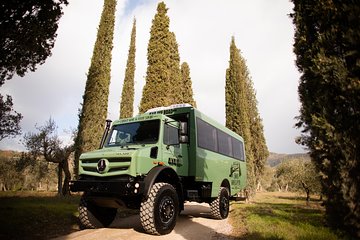 SMALL-GROUP Wine Safaris: Tuscany Wine Tasting Tour from FlorenceFree cancellationInstant confirmation
About this experience
Get a true taste of Italy's famous Tuscany region on one of our wine and food tour departing from Florence. Our off-road wine tours take you beyond the typical tourist paths, offering exclusive access to some of the region’s most stunning vineyards and hidden gems. Hop into a…
from £113.59Book on Viator → Florence Accademia Gallery Tour & Skip-the-Line Tickets IncludedFree cancellationInstant confirmation
About this experience
Perfect for art lovers, history enthusiasts, and first-time visitors, this guided tour offers an in-depth exploration of Florence’s artistic heart—with expert commentary and fast-track access to one of Italy’s most iconic museums, the Accademia Gallery (Galleria…
from £32.33Book on Viator → Best of Florence: Small Group Tour David & Accademia with DuomoFree cancellationInstant confirmation
About this experience
Experience the Tuscan capital's top attractions on a small-group walking tour through Florence. Begin with a timed entry ticket to view Michelangelo's 'David' in the Accademia Gallery and the Duomo. Afterwards, your guide takes you to Piazza della Signoria, an open-air art…
from £48.06Book on Viator → Small-Group Wine Tasting Experience in the Tuscan CountrysideFree cancellationInstant confirmation
About this experience
Enjoy an half day small group tour to discover the beauty of the Tuscan wine country. Drive through vineyards, olive groves and cypress trees. Visit 2 wineries to discover the secrets of wine making, take pictures and taste different wines and olive oil paired with local Tuscan…
from £77.77Book on Viator → Pasta Cooking Class with Unlimited Wine in FlorenceFree cancellationInstant confirmation
About this experience
Learn to make fresh pasta, like the grandmothers made them in Italy. We will teach you every process and stand by you teaching you every step. We will prepare 3 types of fresh pasta such as Ravioli, Tortellini and Tagliatelle, and at the same time we will also prepare sauces to…
from £21.84Book on Viator →
Experiences are sold and operated by Viator and its local suppliers. Head Your Way is an affiliate: we may earn a commission, but your booking, payment, cancellations, refunds and any insurance are handled entirely by Viator under their terms. Head Your Way is not the seller and is not a party to your booking. Prices and availability shown are from Viator and can change — confirm full details on Viator before booking.
Neighbourhoods to explore
Statuto is an established neighbourhood worth exploring for its residential character and local commerce beyond the main tourist zones. Brozzi lies on the northern periphery and offers a view of how the city extends into suburban areas while maintaining neighbourhood identity. Peretola, home to the airport, also contains residential and commercial development that shows contemporary urban expansion.
Novoli is an increasingly developed area on the city's northern edge, demonstrating modern urban planning and mixed-use development. Ricorboli sits to the northeast and contains both residential areas and green space, providing a different urban texture from the dense historic centre. Coverciano lies on the southern periphery and offers views of how newer residential areas integrate with the surrounding landscape.
Petriolo and Isolotto are neighbourhoods on the south and southwest, accessible from the historic centre but with distinct local character. Nave a Rovezzano stretches eastward along the river valley. Sorgane occupies the southwestern area and represents suburban expansion from the city's core. Each neighbourhood offers insight into how Florence extends beyond the Renaissance streets that dominate visitor attention.

When to visit
Florence's climate divides distinctly between seasons. Summer temperatures average 24°C across the warm months, with July reaching an average high of 29.9°C. Winter temperatures are cooler, averaging 5.1°C overall, with January dipping to an average low of 1.3°C. The annual mean high is 18.7°C and the mean low is 9.4°C.
The best months to visit are May, June, July, August, and September. These months offer the most reliable weather for exploring the city on foot and spending time in outdoor spaces. July is also the driest month, which can be advantageous for longer days spent outdoors, though summer crowds peak during this period. June and September offer slightly fewer visitors while maintaining excellent weather.
October is the wettest month, bringing more frequent rainfall that can limit outdoor exploration and affect visibility for photography. Winter months from November through March see cooler temperatures and occasional rain, which can make exploring on foot less pleasant, though crowds diminish significantly. Late spring and early autumn offer the best balance of weather and visitor density.

Getting there
Florence Airport, Peretola, located 4.8 kilometres from the city centre, serves as the most convenient arrival point for most visitors. The airport handles regular flights from across Europe and beyond, though connections may be necessary from some regions.
Pisa International Airport lies 69.4 kilometres away and offers a viable alternative, particularly if flight prices or schedules are more favourable. Train connections link Pisa to Florence regularly, making ground transfer straightforward. Forlì-Luigi Ridolfi International Airport is 80.5 kilometres distant and represents another option depending on flight availability and pricing.
Florence is well connected by rail to other Italian cities and European destinations. Train services run frequently to major centres throughout the country, making the city easily accessible for those travelling by rail. Road connections via motorway link Florence to surrounding regions, though driving in the city centre is restricted and parking is limited.
Flights from £86 to Florence →from London · arrives FLR (4.8 km away) · recently-found fare — price & availability change

Getting around
Walking is the primary way to navigate Florence's historic centre, where narrow medieval streets create a pedestrian-scaled environment. The city's compact layout means most major attractions are accessible on foot, though distances can be deceptive on maps due to the winding street pattern.
Public transport includes buses that connect the city centre to outer neighbourhoods and the airport. Taxis and ride-sharing services provide alternatives for those with luggage or mobility constraints, though traffic congestion is common during peak hours. Bicycles are increasingly used for local transport, with some areas providing cycling infrastructure.
The Arno river divides the city, with several bridges connecting north and south. The historic bridges are pedestrian-friendly, while additional bridges accommodate vehicle traffic. Most visitor attractions lie within walking distance of the historic centre, concentrated north of the river and around the major palaces on the south bank.

Day trips from Florence
Prato lies just 16.4 kilometres away and is easily reached by train or car for a half-day or full-day excursion. The journey takes minimal time, making it ideal for visitors wanting to see another town without extensive travel.
Pisa, 68.1 kilometres distant, is a major regional centre with its own substantial artistic and architectural heritage. Regular train connections mean reaching Pisa takes roughly an hour, allowing a full day to explore its attractions and return to Florence. Livorno, 78.5 kilometres away, provides coastal access and a different urban character, also served by regular transport links.
Bologna is 79.8 kilometres north and represents one of Italy's major cultural and gastronomic centres. The train journey takes roughly ninety minutes, making a day trip feasible, though many visitors choose to stay overnight. Forlì, 80.4 kilometres away, and Modena, 99.9 kilometres distant, offer further options for exploring the Emilia region.
Rimini lies 110.1 kilometres away on the Adriatic coast, representing a longer day trip but offering beach access and a coastal town atmosphere. Perugia, 118.4 kilometres south, is another significant Umbrian city with major artistic monuments. Each destination offers distinct character and attractions, allowing visitors to experience different aspects of central Italy from a Florence base.

Good to know
Florence is designated a UNESCO World Heritage city, reflecting the universal significance of its architectural, artistic, and historical character. This status means many buildings and areas are protected, contributing to the preservation of the city's appearance across different eras.
The city operates on a 24-hour format using the Europe/Rome timezone. Currency is the Euro, accepted throughout the city for all transactions. Italian is the official language, though German and French are also spoken in tourist areas and hospitality establishments.
Summer months bring significant tourist crowds, particularly July and August, which can make major attractions busy and accommodation prices higher. Visiting during May, June, or September offers better conditions for experiencing the city without excessive congestion. Winter months are quieter but cooler, requiring warmer clothing.
The historic centre's layout can be confusing for first-time visitors due to narrow, winding streets and limited directional signage. Maps or mobile navigation apps are valuable tools, though following a wandering route often leads to interesting discoveries. Many streets are pedestrian-only, creating a car-free environment in the core historic area.
Museum visiting requires advance planning, as major galleries often have long queues during peak hours and seasons. Booking tickets in advance, visiting early in the day, or exploring less-visited museums can provide better experiences. Some collections have specific requirements or limited access areas; checking details before visiting is advisable.

Practical information
The official website of Florence's municipal government (comune.firenze.it) provides resources for visitors seeking specific information about opening hours, services, and regulations. The city administration can direct enquiries to appropriate departments for specific visitor needs.
Accommodation ranges from luxury hotels in converted palaces to smaller family-run establishments throughout the city. The peak seasons (May through September) require booking well in advance to secure preferred locations and rates. Off-season accommodation is generally more readily available and less expensive.
Dining in Florence ranges from casual trattorias serving local fare to fine dining establishments. The city's tradition as a centre of commerce and culture means food culture has developed sophisticated standards. Markets such as Mercato di San Lorenzo offer fresh produce and prepared foods for self-catering.
Journeys through here
Notable people from Florence
Born in Florence
- Dante Alighieripolitician, writer
- Niccolò Machiavellipolitician, writer
- Giovanni Boccacciowriter
- Florence Nightingalepolitician, writer
- Amerigo Vespucciwriter
- Sandro Botticellipainter
- Donatellopainter
- Matteo Renzipolitician
All 626 notable people born in Florence →
Died in Florence
- Galileo Galileiscientist, politician
- Niccolò Machiavellipolitician, writer
- Sandro Botticellipainter
- Donatellopainter
- Giottopainter, architect
- Evangelista Torricelliscientist
All 544 notable people who died in Florence →
People with a birthplace or place of death in Florence (Wikidata, notability floor 10 Wikipedia editions). Names link to English Wikipedia (CC BY-SA).
Where to stay in Florence
Hotels are booked on Booking.com (a third party, off this page). You book and pay them directly — Head Your Way is not the seller.
Getting around Florence
Affiliate links — we may earn a commission, never at extra cost to you.
Common questions
- What is the best time of year to visit Florence?
- May, June, July, August, and September offer the best weather conditions, with July averaging 24°C and peaking at 29.9°C. June and September provide pleasant weather with fewer crowds than midsummer. October is the wettest month, while winter months are cooler (averaging 5.1°C) with occasional rain.
- How do I get from the airport to the city centre?
- Florence Airport, Peretola, is located 4.8 kilometres from the city centre and is served by buses and taxis. Pisa International Airport (69.4 kilometres away) and Forlì-Luigi Ridolfi International Airport (80.5 kilometres away) are alternatives, with train connections to Florence.
- Is it easy to walk around Florence?
- Yes, Florence's historic centre is pedestrian-friendly and most major attractions are accessible on foot. However, the narrow medieval streets can be confusing, and a map or navigation app is helpful. Walking is the primary way to experience the city's layout and discover smaller attractions beyond the main tourist routes.
- Which museums are the most important to visit?
- The Galleria degli Uffizi, Galleria dell'Accademia, and Palazzo del Bargello house major art collections. Palazzo Pitti and the Galleria Palatina contain extensive artworks displayed in historic palace settings. The Museo Galileo focuses on the history of scientific instruments. Each museum offers distinct collections and experiences.
- What are the nearest cities for day trips?
- Prato is just 16.4 kilometres away, Pisa is 68.1 kilometres distant, and Livorno is 78.5 kilometres away, all accessible by train. Bologna (79.8 kilometres), Forlì (80.4 kilometres), Modena (99.9 kilometres), Rimini (110.1 kilometres), and Perugia (118.4 kilometres) offer longer day trip options for those with more time.
- What currency and language should I use?
- The currency is the Euro. Italian is the official language, though German and French are spoken in tourist areas. Learning basic Italian phrases is helpful, though English speakers will generally find hospitality staff accommodating in main tourist areas.
On the map
Keep exploring
Nearby places
More places in Italy
Similar destinations
Plan the wider trip
Sources & method
- GeoNames — population · retrieved 2026-08-14
- OurAirports (derived) — nearestAirports · retrieved 2026-08-14
- Imagery — commons
Data compiled 2026-08-14 · editorial checks: passed. See our methodology for how Head Your Way sources and reviews travel data.