
Overview
Fort-de-France is the capital of Martinique and a city of roughly 90,000 people that serves as the cultural and administrative heart of the island. Situated on the Caribbean coast, it functions as the main hub for visitors arriving by air or sea, offering easy access to the wider island's attractions and towns.
The city itself presents a distinctly French-Caribbean character, with French as the official language and the Euro as currency. Its position on the western shore, combined with relatively short distances to neighbouring towns and villages, makes it an ideal base for exploring Martinique's diverse landscape and communities.
Key facts
| Country | Martinique |
|---|---|
| Population | 89,995 |
| Timezone | America/Martinique |
| Nearest airport | Martinique Aimé Césaire International Airport (FDF), 8 km |
| Currency | EUR |
Getting There
Martinique Aimé Césaire International Airport is the primary entry point for most visitors, located just 7.8 kilometres from Fort-de-France. This is the island's main airport and handles the majority of international and domestic flights. The short distance makes it a straightforward journey into the city centre.
Two secondary airports serve the region as alternatives or for connecting flights: George F. L. Charles Airport lies 65.5 kilometres away, whilst Canefield Airport is 88.4 kilometres from the city. Both offer options for travellers with flexible routing, though they are considerably further out and less frequently used for Fort-de-France arrivals.
The city's location on Martinique's western coast, combined with its role as the administrative capital, ensures reliable transport links and clear signposting from the airport. Most visitors will find the short transfer time from Aimé Césaire International to be one of the smoothest aspects of arrival on the island.
Flights from £622 to Fort-de-France →from London · arrives FDF (7.8 km away) · recently-found fare — price & availability change


Getting Around
Fort-de-France functions as Martinique's principal transport hub, with onward connections to surrounding towns and villages. The city's central position on the west coast makes it well-placed for excursions to the rest of the island, whether by rental car, organised tour, or public transport.
The relatively compact distances to nearby settlements mean that day trips are straightforward to arrange. Most neighbouring towns lie within 25 kilometres, and even more distant destinations are accessible for a full day's exploration. Having transport arranged in advance—whether through pre-booked transfers, car rental, or tour operators—is advisable, particularly if you plan to explore beyond the immediate urban area.

Exploring the Surrounding Region
Fort-de-France's central location makes it an excellent base for visiting Martinique's neighbouring communities and attractions. Several towns within easy reach offer distinct character and experience, each warranting a day trip or half-day excursion.
Le Lamentin and Saint-Joseph are the closest neighbours, both within approximately 8 kilometres, making them ideal for a quick escape from the city without venturing far. Ducos lies 11.2 kilometres south and offers another nearby option. Moving slightly further afield, Le Robert (16.4 kilometres) and La Trinité (19.1 kilometres) sit to the north, whilst Sainte-Marie extends further along the northeast coast at 21.9 kilometres. Le François, at 18.5 kilometres, provides access to the eastern side of the island.
For those willing to travel further, Gros Islet lies 61.2 kilometres away and represents a more substantial day trip, offering a contrast to Fort-de-France's urban pace. The variety of these surrounding communities—from coastal villages to inland towns—means that visitors can sample different aspects of Martinique's culture and landscape without spending entire days purely on travel.


When to Visit
Fort-de-France experiences a tropical Caribbean climate that remains warm year-round. The city's weather patterns follow the broader seasonal rhythms of the Lesser Antilles, though specific temperature data for the city itself is not comprehensively documented in standard references.
Visitors should be aware that the Caribbean hurricane season runs from June through November, with the most active period typically falling in late summer and early autumn. Planning a visit during the December-to-May window generally offers more stable weather conditions, though Fort-de-France remains an active city throughout the year.
The city's role as the administrative and cultural capital means it offers activities and appeal regardless of season. Travellers planning to explore beyond Fort-de-France should factor in seasonal considerations for water-based activities and outdoor excursions, but the city itself maintains its function and attractions year-round.

Practical Essentials
Fort-de-France operates on the America/Martinique timezone and uses the Euro as its currency, reflecting Martinique's status as an overseas territory of France. French is the official language throughout the city and wider island, though English may be spoken in tourist-oriented establishments. Visitors are advised to carry some cash and to confirm card acceptance at specific venues, as small businesses and local shops may not accept electronic payment.
As the capital city, Fort-de-France has reliable infrastructure including banking services, pharmacies, and medical facilities. Mobile networks operate throughout the city and surrounding areas. Most services and amenities are readily available, making it straightforward to handle practical needs during your stay.

Understanding Fort-de-France
Fort-de-France serves as Martinique's political, economic, and cultural centre, a status that shapes its character and offerings. Unlike some Caribbean capitals, it remains a working city rather than a heritage-focused tourist destination, which influences what visitors will experience during their time here.
The city's significance lies partly in its function as Martinique's principal entry point. For many travellers, Fort-de-France serves as a transport hub and base for exploring the island's natural attractions, neighbouring communities, and cultural sites. This role—as connector and administrator—defines the city more than any single landmark or attraction.
Understanding Fort-de-France in this context helps set realistic expectations. Visitors seeking primarily urban sightseeing may find value in treating the city as a sophisticated launching point, with the real diversity of Martinique accessible through day trips and excursions to the surrounding towns and villages documented in the day-trips section above.

Martinique and Beyond
Fort-de-France's position on Martinique places it within the broader Lesser Antilles region. The island's geography and settlement patterns radiate from the capital, with coastal towns and villages dotting the shoreline at intervals of 8 to 20 kilometres.
The presence of George F. L. Charles Airport 65.5 kilometres away suggests connections to neighbouring islands within practical range. This regional infrastructure means that Fort-de-France could potentially serve as a base for exploring beyond Martinique itself, though such excursions fall outside the immediate scope of the city and its immediate surroundings.

Experiences you can book in Fort-de-France
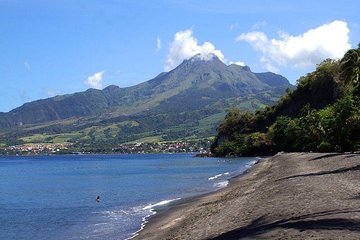 North Tour: rainforest, rum distillery, black sand beach etcFree cancellation
About this experience
Best way is to let our customers speak : "The tour with Sebastiano was the best guided tour we have ever taken. He is very knowledgeable in history, geology, and the local flora and fauna. His enthusiasm about the island, the rainforest and history inspired us a lot and…
from £117.96Book on Viator → Fort-de-France Food Tasting and Cultural Walking TourFree cancellation
About this experience
Explore Martinican sweeties and culture on this food and walking tour in the downtown of the chief town of Fort-de-France. Sample local sweeties and beyond the bites, you’ll also experience the rich culture and architecture that Fort-de-France has to offer. This is a small-group…
from £54.17Book on Viator → Tour to discover the lush North and waterfallsFree cancellation
About this experience
Cruise passengers, don’t worry, the tour will always be adapted to your ship’s schedule, and we’ll always come back well before Check-out, so you have a delicious stress-free day! Board my comfortable van for a total immersion in the landscapes of authentic Martinique with the…
from £131.06Book on Viator → Tropical Island Private Tour of MartiniqueInstant confirmation
About this experience
Experience our Tropical Island Private Tour of Martinique! Begin your visit at the Capital City's Saint-Louis Cathedral and Schoelcher Library. Enjoy the panoramic views and Parisian atmosphere at the mini-replica of the Sacred Heart Basilica. Take in the stunning panoramic…
from £507.66Book on Viator → Half Day Private Custom Tour of MartiniqueInstant confirmation
About this experience
Experience our Half Day Private Custom Tour of Martinique! Embark on a serene journey through the picturesque landscapes of Martinique as you make your way to the heart of the city. Upon your arrival, meet your seasoned tour guide, ready to lead you on an enchanting Private…
from £504.16Book on Viator → Vanilla Circuit, meeting our local producersFree cancellation
About this experience
This tour will take you to the pretty Caravelle peninsula, about in the middle of the Atlantic coast of the island. A short walk of 25min will lead us to discover a unique natural environment: the mangrove. This amazing ecosystem is observable in tropical regions, making the…
from £139.8Book on Viator →
Experiences are sold and operated by Viator and its local suppliers. Head Your Way is an affiliate: we may earn a commission, but your booking, payment, cancellations, refunds and any insurance are handled entirely by Viator under their terms. Head Your Way is not the seller and is not a party to your booking. Prices and availability shown are from Viator and can change — confirm full details on Viator before booking.
Where to stay in Fort-de-France
Hotels are booked on Booking.com (a third party, off this page). You book and pay them directly — Head Your Way is not the seller.
Getting around Fort-de-France
Affiliate links — we may earn a commission, never at extra cost to you.
Common questions
- What is the nearest airport to Fort-de-France?
- Martinique Aimé Césaire International Airport (FDF) is the nearest and primary airport, located 7.8 kilometres from Fort-de-France. It handles most international arrivals and offers the shortest transfer time into the city.
- Which towns near Fort-de-France make good day trips?
- Le Lamentin and Saint-Joseph are the closest at around 8 kilometres. Moving slightly further, Le Robert (16.4 km), La Trinité (19.1 km), and Le François (18.5 km) offer varied experiences. Gros Islet at 61.2 kilometres is more distant but still accessible as a full-day excursion.
- What currency and language are used in Fort-de-France?
- The Euro (EUR) is the official currency, and French is the official language. Fort-de-France is part of Martinique, an overseas territory of France, which explains both features.
- Is there a good time to visit Fort-de-France?
- The Caribbean hurricane season runs from June to November, so visiting during December to May generally offers more stable weather. That said, Fort-de-France functions as a city year-round with activities and services available regardless of season.
- How is Fort-de-France best used as a base?
- Fort-de-France functions primarily as Martinique's administrative hub and transport gateway. It serves as an excellent base for day trips to neighbouring towns and excursions across the island, with most surrounding communities within 20 kilometres and easily reached by road.
- Are there other airports serving the Fort-de-France area?
- Yes. George F. L. Charles Airport lies 65.5 kilometres away and Canefield Airport is 88.4 kilometres from the city. Both are considerably further than Martinique Aimé Césaire International and are used less frequently for Fort-de-France arrivals.
On the map
Keep exploring
Similar destinations
Plan the wider trip
Sources & method
- GeoNames — population · retrieved 2026-08-14
- OurAirports (derived) — nearestAirports · retrieved 2026-08-14
- Imagery — commons
Data compiled 2026-08-14 · editorial checks: passed. See our methodology for how Head Your Way sources and reviews travel data.