
Overview
Bucharest is Romania's capital and largest city, a sprawling metropolis of nearly two million people where modern energy collides with layers of historical architecture. The city earned UNESCO World Heritage status, reflecting its significance as a cultural and architectural centre. Set at a modest elevation on relatively flat terrain, Bucharest functions as the country's economic and cultural heart, drawing visitors keen to explore its museums, churches, and evolving urban landscape.
The character of Bucharest emerges from its particular history—shaped by periods of expansion, architectural reinvention, and cultural development across different eras. Walking its streets reveals Orthodox churches with UNESCO recognition alongside grand civic buildings, performance venues, and intimate museums. The city's layout spans distinct neighbourhoods, each with its own flavour, connected by an accessible transport network that makes exploration straightforward.
Key facts
| Country | Romania |
|---|---|
| Population | 1.88 million |
| Timezone | Europe/Bucharest |
| Nearest airport | Bucharest Băneasa Aurel Vlaicu International Airport (BBU), 8 km |
| Currency | RON |
History and context
Bucharest's story unfolds across multiple historical eras, each leaving its imprint on the urban fabric. The medieval period saw the emergence of the city as a settlement, establishing foundations that would shape its development. The early Christian and Baroque periods brought waves of religious architecture, many of which survive today as UNESCO-protected monuments. Several Orthodox churches dotting the city—Church of Colta, Curtea Veche Church, St. Dumitru's Church, and Domnița Bălașa church among them—date from these formative centuries and stand as testaments to the city's spiritual heritage.
Later periods transformed Bucharest into a modern European capital. The Renaissance and early modern eras introduced secular architecture and civic institutions, whilst the modern period saw dramatic urban expansion and the construction of grand public buildings. This layering of epochs means visitors encounter medieval churches mere blocks from neoclassical palaces and twentieth-century cultural institutions. The UNESCO designation recognises this accumulated architectural and cultural significance, acknowledging Bucharest's importance as a repository of Romanian identity across centuries.

Things to do
Bucharest's religious architecture forms one of its richest veins for exploration. Beyond the UNESCO-listed churches, numerous Orthodox and minority-faith places of worship punctuate the city. Stavropoleos Monastery is a spiritual and architectural anchor, whilst Antim Monastery offers another significant monastic space. The Zlătari Church and Saint Nicholas Church – Ghica represent distinct ecclesiastical traditions within Bucharest. For visitors interested in minority faiths, Templul Coral and Biserica Anglicană demonstrate the city's historical religious diversity. The Bucharest Bărăția Church and Gabroveni Inn, both UNESCO-protected, add further layers to understanding the city's sacred and civic heritage. A methodical church-visiting itinerary rewards those willing to seek out these often quiet, absorbing spaces.
The city's museums span art, history, and specialist collections. Muzeul Național de Artă al României houses the national art collection, whilst Muzeu "Theodor Pallady" focuses on individual artistic achievement. Those drawn to theatrical heritage should visit Muzeul Teatrului Național, documenting the national theatre's history. Bucharest's technical and natural history are covered by Muzeul Național Tehnic "Prof. ing. Dimitrie Leonida" and Muzeul Național de Istorie Naturală "Grigore Antipa" respectively, offering insights into engineering heritage and the natural world. Museul Național Geologic specialises in geological specimens, whilst Muzeu Colecțiilor de Artă presents curated private collections. National Museum of Romanian History provides broad historical context. Muzeul Național al Țăranului Român explores rural and peasant traditions that shaped Romanian culture. For those with an interest in astronomy, Observatorul Astronomic Municipal "Amiral Vasile Urseanu" Bucuresti offers a different kind of engagement with the night sky.
Performing arts institutions punctuate Bucharest's cultural calendar year-round. Romanian National Opera is an architectural landmark as much as a venue for operatic performance, whilst Teatrul Național serves as the country's principal dramatic stage. Teatrul de Operetă și Musical "Ion Dacian" offers lighter musical theatre. These venues programme regularly and represent significant draws for culturally inclined visitors. Sala Palatului and Sala Dalles function as concert and event spaces, hosting everything from classical performances to contemporary acts.
Architectural landmarks beyond the religious sphere merit attention. Ateneul Român stands as a notable civic building of cultural importance. Grand Hotel Continental represents a particular moment in European hotel architecture. Foișorul de Foc offers another distinctive landmark to seek out. Palatul Bragadiru provides insight into palace architecture within an urban setting. These buildings, whether accessible via guided tours, performances, or simply exterior viewing, flesh out understanding of how Bucharest developed as a modern capital.


Experiences you can book in Bucharest
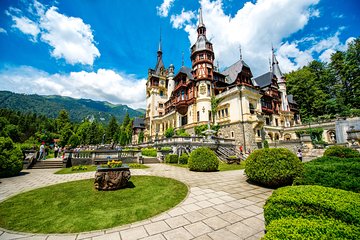 Bucharest to Dracula Castle, Peles Castle and Brasov Guided TourFree cancellationInstant confirmation
About this experience
Travel to discover the sights and treasures of Transylvania. Reach Sinaia to enter the realm of a fairy tale on a tour of splendid Peles Castle, founded by the former Romanian kings and used as royal residence. Enter the Gothic chambers of Bran Castle, also known as ‘Dracula’s…
from £25.34Book on Viator → Dracula's Castle, Peles Castle and Brasov Day Trip from BucharestFree cancellationInstant confirmation
About this experience
Transylvania is perhaps one of the most popular places in the world for the legends and mysteries surrounding his paths. On this tour you will discover the charm of the Castles of Transylvania: Peles Castle and Dracula's Castle (Bran Castle) and the legend of the famous Count…
from £20.97Book on Viator → Full Day Trip to Bulgaria from BucharestFree cancellationInstant confirmation
About this experience
Add a second country to your trip with a well paced day tour from Bucharest to northern Bulgaria, covering three distinct stops in one itinerary: Ruse, Arbanasi, and Veliko Tarnovo. After crossing the Danube, enjoy a short stop in Ruse, including the city center pedestrian…
from £62.12Book on Viator → Transylvania and Dracula Castle Full Day Tour from BucharestFree cancellationInstant confirmation
About this experience
See Romania’s most iconic trio in one day: Peles Castle, Bran Castle, and the old town of Brasov, on a carefully planned day trip from Bucharest. Our well-prepared and passionate tour leader accompanies the group, keeps the schedule running smoothly, and shares practical context…
from £51.55Book on Viator →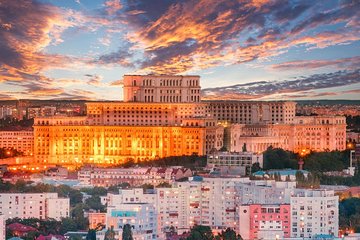 Palace of Parliament in Bucharest - fast-track tickets and guideFree cancellationInstant confirmation
About this experience
You're are going to meet the host at our office and your journey in the Communist past of Romania will start. We'll take you inside the palace , , sort out the tickets , the guide will be introduce to you. After more then one hour inside one of Europe's most impressive…
from £28.75Book on Viator →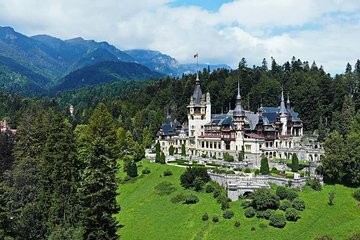 Dracula's Castle, Peles Castle and Brasov - Private Day Trip from BucharestFree cancellationInstant confirmation
About this experience
This is a private tour from Bucharest to Transylvania on a very picturesque route through the Carpathian Mountains allowing you to discover: - Peles Castle - the most beautiful Neo-Renaissance Castle în Romanian. - Bran (Dracula's) Castle - a national monument and landmark in…
from £130.19Book on Viator →
Experiences are sold and operated by Viator and its local suppliers. Head Your Way is an affiliate: we may earn a commission, but your booking, payment, cancellations, refunds and any insurance are handled entirely by Viator under their terms. Head Your Way is not the seller and is not a party to your booking. Prices and availability shown are from Viator and can change — confirm full details on Viator before booking.
Neighbourhoods to explore
Lipscani represents Bucharest's old town, its tangled medieval streets and compact layout contrasting sharply with the city's modern expanses. This neighbourhood concentrates many of the city's historic churches and older civic buildings, making it the natural starting point for any first visit. The density of heritage sites and the walkability of the area reward unhurried wandering.
Centrul Civic functions as the modern heart of administration and culture. This neighbourhood contains major civic institutions, performance venues, and museums, making it essential for visitors interested in contemporary Bucharest's self-presentation and cultural life. The concentration of museums and theatres here means many days could be spent within this relatively compact area.
Apărătorii Patriei Quarter and Tineretului represent residential neighbourhoods with their own character. These areas offer a sense of how ordinary Bucharesters live, away from the tourist infrastructure of older quarters. They're less immediately historically rich but provide balance to a visit overly focused on heritage sites.
13 Septembrie and Berceni are further residential districts that round out the city's geography. These neighbourhoods house local shops, cafes, and everyday urban life, offering visitors a chance to experience Bucharest beyond curated tourist routes if they venture there.

When to visit
August and September represent the optimal months for visiting Bucharest. During these months, the climate is warm and generally stable—August sees temperatures averaging around 24°C, whilst the city enjoys summer highs near 29.7°C. September maintains these comfortable conditions as summer winds down. The weather supports extended outdoor exploration without the intensity of peak summer heat.
Summer months more broadly (June through August) are warm and pleasant, though June is notably the wettest month, bringing frequent rainfall. Summer highs reach around 29.7°C. Those planning visits during summer should pack light clothing and be prepared for occasional wet weather, particularly in June.
Winter (December through February) transforms the city's experience entirely. January is the coldest month, with temperatures dropping to an average low of -4.3°C and winter averages around -0.6°C. February is the driest month of the year, though winter across the board brings reduced daylight and colder conditions that limit comfortable outdoor exploration. Winter is the least ideal season for general tourism, though those attending specific performances or cultural events may find the off-season rewarding.
Spring and autumn shoulder seasons offer moderate temperatures and fewer crowds than summer, though they lack the guaranteed warmth of August and September. Those flexible with timing should prioritise the late summer months.

Getting there
Bucharest is served by two airports. Bucharest Henri Coandă International Airport (OTP) lies 15.5 kilometres from the city centre and handles the majority of international traffic. Bucharest Băneasa Aurel Vlaicu International Airport (BBU) is closer, just 7.9 kilometres away, and accommodates regional and some international flights. Both airports have ground transport links into the city, with taxis and public transport options available from each.
Train services connect Bucharest to other Romanian cities and international destinations, with the main station handling most long-distance traffic. Coach services provide another connection option for regional travel. Within Romania, cities like Ploieşti (58 kilometres), Târgovişte (75.1 kilometres), and Pitești (108.5 kilometres) are accessible for day trips or onward travel.
Flights from £101 to Bucharest →from London · arrives BBU (7.9 km away) · recently-found fare — price & availability change

Getting around
Bucharest's public transport system includes buses, trams, and metro services that connect the city comprehensively. The system is affordable and navigable, though unfamiliar visitors may find paper maps or digital navigation apps helpful initially. Taxis are widely available and relatively inexpensive. Walking remains viable within neighbourhoods and between nearby attractions, though the city's large area means relying entirely on foot will limit coverage.
The currency is the Romanian new leu (RON). Most establishments in central areas accept card payments, though smaller shops and some traditional venues may operate cash-only. ATMs are abundant throughout the city, and currency exchange facilities operate at airports and in central zones.

Day trips from Bucharest
Several cities within reasonable travelling distance reward day-trip visits. Ploieşti lies 58 kilometres away and offers industrial heritage and cultural institutions distinct from Bucharest's mix. Giurgiu, 61.7 kilometres distant, provides a different character along the Danube. Târgovişte, 75.1 kilometres away, anchors a region with its own historical significance. Alexandria, 79.3 kilometres out, and Buzău, 98.3 kilometres away, extend the range for those with more time. Piteşti, 108.5 kilometres from the city, and Slobozia, 100.8 kilometres away, represent the outer edge of realistic day-trip distance.
These surrounding cities vary in character and focus—some emphasise industrial or recent history, others offer cultural institutions or distinct architectural character. The varying distances allow flexibility in choosing trips that match available time and specific interests. Local transport connections make reaching these destinations feasible without private transport, though journey times vary considerably depending on exact location within Bucharest and destination accessibility.

Good to know
Bucharest operates on Central European Time (Europe/Bucharest timezone), so visitors from western Europe should adjust only slightly. The Romanian language is spoken throughout, though English speakers will find English increasingly prevalent in central tourist areas, particularly among younger residents and those working in hospitality.
The city's UNESCO World Heritage status reflects its architectural and cultural significance, though this designation doesn't automatically mean all attractions are immediately accessible or heavily promoted. Many significant sites remain quiet and somewhat undiscovered, requiring visitors to seek them out deliberately—a quality that rewards curiosity and exploration.
Bucharest's scale—226 square kilometres with substantial residential populations—means the city extends well beyond traditional tourist quarters. Those willing to venture into residential neighbourhoods will encounter everyday Romanian urban life, local shops, and cafes that serve locals rather than tourists. This can enrich a visit considerably, offering perspective beyond heritage tourism.

Journeys through here
Where to stay in Bucharest
Hotels are booked on Booking.com (a third party, off this page). You book and pay them directly — Head Your Way is not the seller.
Getting around Bucharest
Affiliate links — we may earn a commission, never at extra cost to you.
Common questions
- What is the best time to visit Bucharest?
- August and September are optimal, offering warm temperatures averaging 24°C with summer highs near 29.7°C and generally stable weather. Winter is cold (January averages -0.6°C) and less suitable for tourism, whilst June is the wettest month. Spring and autumn provide moderate temperatures but with less guaranteed warmth than late summer.
- Which airport should I fly into?
- Bucharest Henri Coandă International Airport (OTP), 15.5 kilometres from the city, handles most international traffic. Bucharest Băneasa Aurel Vlaicu International Airport (BBU), just 7.9 kilometres away, serves regional and some international flights. Both have ground transport into the city.
- Is Bucharest UNESCO-listed, and why?
- Yes, Bucharest holds UNESCO World Heritage status. The designation recognises its accumulated architectural and cultural significance, including numerous Orthodox churches, civic buildings, and institutions that reflect different historical eras from medieval times through the modern period.
- How many churches should I plan to visit?
- Bucharest contains numerous Orthodox churches, several of which hold UNESCO protection—including Stavropoleos Monastery, Antim Monastery, Church of Colta, Curtea Veche Church, St. Dumitru's Church, Domnița Bălașa church, Zlătari Church, Saint Nicholas Church – Ghica, and Bucharest Bărăția Church. First-time visitors typically visit 4–6 key examples rather than attempting all available sites.
- What currency does Bucharest use, and are cards accepted?
- The Romanian new leu (RON) is the currency. Card payments are widely accepted in central areas and tourist establishments, though some traditional shops operate cash-only. ATMs are abundant throughout the city.
On the map
Keep exploring
Nearby places
More places in Romania
Similar destinations
Plan the wider trip
Sources & method
- GeoNames — population · retrieved 2026-08-14
- OurAirports (derived) — nearestAirports · retrieved 2026-08-14
- Imagery — commons
Data compiled 2026-08-14 · editorial checks: passed. See our methodology for how Head Your Way sources and reviews travel data.