
Overview
Atlanta is a major city in the southeastern United States, located in Fulton County at an elevation of 320 metres. With a population of over 510,000, it serves as a significant cultural, political and economic hub. The city is designated a UNESCO World Heritage site, reflecting its historical importance and architectural heritage.
Visitors will find a layered city where modern sports venues and contemporary attractions sit alongside historic districts and monuments. The character of Atlanta emerges from its diverse neighbourhoods, green spaces, and role as a centre for arts, commerce and civic life. English and Spanish are spoken throughout the city.
Key facts
| Country | United States |
|---|---|
| Population | 510,823 |
| Timezone | America/New_York |
| Elevation | 320 m |
| Nearest airport | Hartsfield Jackson Atlanta International Airport (ATL), 13 km |
| Currency | USD |
History and context
Atlanta's history is marked by episodes of conflict and transformation. The city witnessed significant military action during a major battle that left an indelible mark on its development. Another battle took place within its boundaries, further shaping the trajectory of settlement and reconstruction.
The post-conflict era saw Atlanta rebuild and gradually establish itself as a centre of commerce and culture. Historic districts like the West End preserve the architectural character of this period of renewal. The city's development into a modern metropolis has been accompanied by careful preservation of landmarks that document its past, including civic buildings and cultural institutions that anchor its identity today.


Things to do
Atlanta's attractions reflect its dual character as both a working city and a cultural destination. The Georgia Aquarium stands as a major draw for visitors, offering extensive marine life exhibits and interactive experiences. Centennial Olympic Park provides open green space in the downtown area, serving as a venue for public gatherings and events. Maddox Park and Westside Park offer recreational facilities within the city boundaries.
The Margaret Mitchell House offers insight into the life and work of a significant American author, with exhibits and tours exploring her connection to Atlanta. The Rialto Center for the Arts is an active performance venue hosting theatre, music and dance productions throughout the year. First United Methodist Church of Atlanta is a historic religious building representing the city's architectural heritage.
Sports facilities punctuate the urban landscape. State Farm Arena is a major venue for professional sports and entertainment events. Georgia Dome, Omni Coliseum, Atlanta-Fulton County Stadium and Herndon Stadium represent different eras of the city's infrastructure development. These venues have hosted significant sporting competitions and continue to draw crowds for contemporary events.
The Atlanta Beltline is a converted rail corridor project that now functions as a mixed-use pathway for walking, cycling and accessing parks. It represents a modern approach to urban green space and mobility within the city. West Lake station serves as a transit point within this developing network.
Civic architecture includes Atlanta City Hall, a UNESCO-designated building that remains a functioning government centre. The Atlanta Constitution Building and the United States Court of Appeals for the Eleventh Circuit are important institutional structures. The Georgia World Congress Center provides large-scale event and exhibition space.
Public monuments and memorials are scattered throughout the city, honouring figures from Atlanta's history and broader American heritage. These include statues and commemorative works dedicated to notable individuals who shaped the region.


Experiences you can book in Atlanta
 90-Minute Narrated Sightseeing Trolley Tour in AtlantaFree cancellationInstant confirmation
About this experience
The Peachtree Trolley is simply the best way to see the sights and get acquainted with the city known as The Capital of the South. The trolley will provide 90 minute fully-narrated tours originating near Centennial Olympic Park and will introduce you to the “Must-Sees” of…
from £27.08Book on Viator →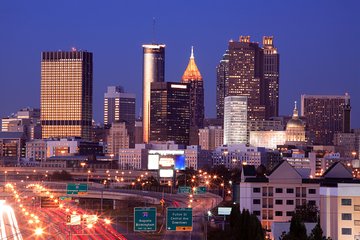 City Lights Atlanta Night-Time Bus Tour with Photos & Dinner StopFree cancellationInstant confirmation
About this experience
See the city All Aglow! Witness the unforgettable spectacle of Atlanta’s impressive buildings and structures lit against the night sky. This tour condenses 3 days of independent exploration into a 3hr voyage. You'll see Atlanta's coolest neighborhoods in the Old 4th Ward filled…
from £51.91Book on Viator → Atlanta Sightseeing Bus TourInstant confirmation
About this experience
Enjoy the beautiful Atlanta Beltline and tour Krog Street Market and Ponce City Market. Visit Buckhead and embark on our Buckhead Mansion Tour. Have lunch at Ponce City Market and tour the Martin Luther King Memorial Site. You will have the ability to get off the bus at these…
from £52.66Book on Viator → Atlanta's Black History and Civil Rights TourFree cancellationInstant confirmation
About this experience
Join us as we unfold time with this exciting Black History and Civil Rights tour. What better place to delve into African-American heritage than the Mecca of the Civil Rights Movement? Showcasing historic sites and most talked about black historic neighborhoods like Summerhill,…
from £55.67Book on Viator → Atlanta CityPASS®Free cancellationInstant confirmation
About this experience
Experience 5 top attractions and save up to 47% with Atlanta CityPASS® tickets. One simple purchase removes the stress of planning, so you can relax and enjoy your memories in the making. With 9 days to use your tickets, you’ll have plenty of time to explore the best…
from £86.75Book on Viator → Atlanta Helicopter Tour Quick HopFree cancellationInstant confirmation
About this experience
Soar above the sprawling suburbs of Atlanta on this quick helicopter tour that unveils stunning aerial views of the city’s most iconic landmarks. Departing from Fulton County Airport, glide over quiet neighborhoods and winding roads, catching glimpses of the impressive downtown…
from £97.81Book on Viator →
Experiences are sold and operated by Viator and its local suppliers. Head Your Way is an affiliate: we may earn a commission, but your booking, payment, cancellations, refunds and any insurance are handled entirely by Viator under their terms. Head Your Way is not the seller and is not a party to your booking. Prices and availability shown are from Viator and can change — confirm full details on Viator before booking.
Exploring neighbourhoods
Atlanta comprises distinct neighbourhoods, each with its own character and history. English Avenue and Vine City form an older residential area with deep community roots. Cascade Heights, Center Hill, Colonial Hills, Grove Park and Perkerson represent various residential communities across the city, each contributing to Atlanta's diverse urban fabric.
The West End Historic District stands out for its preservation of period architecture and streetscapes, earning it UNESCO recognition. This area showcases buildings and planning from an earlier era of the city's development. Just Us and CNN Center represent different facets of contemporary Atlanta—one a neighbourhood community, the other a significant media and commercial landmark.
The city is also divided by institutional zones. Atlanta Public Schools and Fulton County School System boundaries define educational service areas, while Bankhead refers to another geographic or community area within the city. These various neighbourhoods and zones create the texture of daily life across Atlanta's 348 square kilometres.

Getting there
Atlanta is served by Hartsfield Jackson Atlanta International Airport, situated 13 kilometres from the city centre. This major hub provides extensive domestic and international flight connections. For those preferring a smaller airport, DeKalb Peachtree Airport is located 16 kilometres away and handles regional traffic.
Ground transportation from these airports connects to the city's main districts, making arrival straightforward for most visitors. Once in Atlanta, multiple transport options are available for navigating the urban area.
Flights from £455 to Atlanta →from London · arrives ATL (13 km away) · recently-found fare — price & availability change

Getting around
Atlanta's layout can be navigated by various means. The Atlanta Beltline offers a scenic route for walking and cycling, particularly useful for accessing parks and connecting different areas. Public transit serves the city, with West Lake station representing one connection point.
The city's sprawling nature means that some attractions may require driving or organised transport to reach efficiently. Local knowledge or advance planning helps when moving between neighbourhoods. The grid patterns in older sections contrast with the more organic layout of newer developments, affecting navigation strategies depending on your location.

Day trips from Atlanta
Several destinations lie within reasonable driving distance and make worthwhile excursions from the city. Rome is situated 91 kilometres away and offers a change of pace from urban exploration. Athens, located 96 kilometres distant, provides its own cultural and educational attractions.
Closer options include Sandy Springs at 19.5 kilometres, and Marietta at 27 kilometres, both accessible for shorter outings. South Fulton lies 31.6 kilometres away, while Douglasville is 33 kilometres distant. Lawrenceville, 43.5 kilometres from Atlanta, and Gainesville, 80 kilometres away, offer progressively more distant alternatives for those willing to travel further afield.
These surrounding towns and cities provide contrast to the urban environment, from smaller civic centres to towns with their own historical or recreational character. Local travel guides and tourism resources for each destination can help plan specific visits.

When to visit
Atlanta's climate supports year-round visitation, though specific temperature and precipitation data can guide personal preference. The city experiences seasonal variation typical of the southeastern United States, with distinct weather patterns across the calendar.
Summer months bring warm conditions suitable for outdoor activities and park visits, though heat may be intense. Winter is generally mild compared to northern regions, making off-season travel comfortable for those avoiding summer crowds. Spring and autumn offer pleasant conditions for walking and exploring neighbourhoods without extreme temperatures.
Event schedules should factor into planning, as major sports competitions and cultural productions concentrate at certain times. Checking the schedules of venues like State Farm Arena and the Rialto Center can help align visits with performances or sporting events of interest.
Practical information
Atlanta operates in the America/New_York timezone. The official currency is the United States dollar (USD). English is the primary language, with Spanish also spoken throughout the city, reflecting its diverse population.
The city covers approximately 348 square kilometres and sits at a modest elevation of 320 metres, creating a relatively accessible terrain for exploration on foot in many areas. Official city resources are available through the city government website for current information on services, regulations and public programmes.
As a UNESCO World Heritage designated place, Atlanta receives formal recognition of its cultural and historical significance. This status reflects both the architectural merit of certain structures and the broader historical importance of the city's development and role in American history.
Journeys through here
Where to stay in Atlanta
Hotels are booked on Booking.com (a third party, off this page). You book and pay them directly — Head Your Way is not the seller.
Getting around Atlanta
Affiliate links — we may earn a commission, never at extra cost to you.
Common questions
- Which airport should I fly into?
- Hartsfield Jackson Atlanta International Airport, 13 kilometres from the city centre, is the major hub with extensive flight options. DeKalb Peachtree Airport, 16 kilometres away, is an alternative for regional flights. Both connect to the city via ground transport.
- Is Atlanta a walkable city?
- Certain areas, particularly historic districts and the downtown core, are pedestrian-friendly. The Atlanta Beltline is excellent for walking and cycling. However, Atlanta's sprawl means that visiting multiple attractions often requires driving or organised transport between neighbourhoods.
- What is the best time to visit?
- Atlanta is visitable year-round. Spring and autumn offer pleasant temperatures. Summer is warm and suitable for outdoor activities. Winter is mild. Check event schedules at venues like State Farm Arena and the Rialto Center to align your visit with performances or sporting events.
- What makes Atlanta historically significant?
- Atlanta is a UNESCO World Heritage site reflecting its historical importance. The city experienced significant military conflict that shaped its development, and subsequent reconstruction established it as a major centre. Historic districts like the West End preserve this heritage, alongside monuments and civic buildings documenting the city's trajectory.
- What are the main attractions for first-time visitors?
- Key attractions include the Georgia Aquarium for marine life exhibits, Centennial Olympic Park for open space and public gathering, the Margaret Mitchell House for literary history, and State Farm Arena for sports and entertainment. The West End Historic District and Atlanta City Hall showcase architectural heritage. The Atlanta Beltline offers a scenic route through the city on foot or bicycle.
- Are there neighbourhoods with distinct character?
- Yes. The West End Historic District preserves period architecture and is UNESCO-recognised. English Avenue, Vine City, Cascade Heights, Grove Park and other residential areas each have their own community character. The city contains both historic preservation areas and contemporary commercial zones like CNN Center.
On the map
Keep exploring
More places in United States
Similar destinations
Plan the wider trip
Sources & method
- GeoNames — population · retrieved 2026-08-14
- OurAirports (derived) — nearestAirports · retrieved 2026-08-14
- Imagery — commons
Data compiled 2026-08-14 · editorial checks: passed. See our methodology for how Head Your Way sources and reviews travel data.