
Overview
Melbourne is Australia's second-largest city, sprawling across nearly 10,000 square kilometres of Victoria. With a population exceeding 5.4 million, it serves as a major cultural and commercial hub, home to significant museums, galleries, theatres, and markets that draw visitors from across the globe.
The city's character emerges from its diverse neighbourhoods, each with distinct cultural identities. From the Greek Precinct to Chinatown, Little Italy to Koreatown, Melbourne reflects waves of migration and settlement. Historic landmarks sit alongside contemporary venues, whilst markets and parks offer everyday spaces where the city's life unfolds.
Key facts
| Country | Australia |
|---|---|
| Population | 5.44 million |
| Timezone | Australia/Melbourne |
| Nearest airport | Melbourne Essendon Airport (MEB), 11 km |
| Currency | AUD |
Things to do
Melbourne's market life is central to the city's identity. Queen Victoria Market operates as a long-established public market where visitors can browse produce, textiles, and crafts. South Melbourne Market offers a similar experience in its own neighbourhood, serving as a gathering point for locals and travellers alike.
The Old Melbourne Gaol stands as a significant landmark from the city's past. Originally a place of incarceration, it now functions as a site visitors can explore to understand Melbourne's history. The Old Treasury Building similarly preserves the city's administrative heritage, whilst Cooks' Cottage provides insight into early European settlement.
Cultural institutions define much of what Melbourne offers. The National Gallery of Victoria holds extensive art collections, whilst the Melbourne Museum provides broader historical and natural history context. For cinema and moving image, ACMI focuses on these particular art forms. The Immigration Museum tells the stories of people who arrived and settled in the region.
Performance venues are scattered throughout the city centre and nearby areas. The Arts Centre Melbourne (Theatres Building) hosts theatrical productions, as does Her Majesty's Theatre, the Comedy Theatre, the Princess Theatre, and the Malthouse Theatre. Hamer Hall hosts musical performances. These venues reflect Melbourne's reputation as a centre for live performance.
Religious architecture contributes to the city's visual and cultural landscape. Saint Paul's Cathedral, Collins Street Baptist Church, Scots Church, St Michael's Uniting Church, Wesley Uniting Church, and Saint James Old Cathedral represent different Christian denominations, while the Melbourne City Synagogue serves the Jewish community.
Sports venues dominate certain areas. The Melbourne Cricket Ground, Marvel Stadium, and AAMI Park host major sporting events. The Rod Laver Arena, Margaret Court Arena, and John Cain Arena are tennis facilities, whilst Yarra Park provides open space near these facilities. Federation Square functions as a public gathering space with cultural programming and dining.
Other notable sites include Crown Melbourne for entertainment, the Royal Botanic Gardens for natural respite, and Federation Bells for interactive sound art. MPavillion serves contemporary design and cultural purposes.


Experiences you can book in Melbourne
 Puffing Billy & Rainforest Tour from MelbourneFree cancellationInstant confirmation
About this experience
Escape Melbourne on an unforgettable adventure with the Puffing Billy & Rainforest Tour. Begin at Grants Picnic Ground, where native birdlife and serene rainforest trails await. Then, board the iconic Puffing Billy Railway at Belgrave Station, and feel the thrill as you dangle…
from £96.59Book on Viator →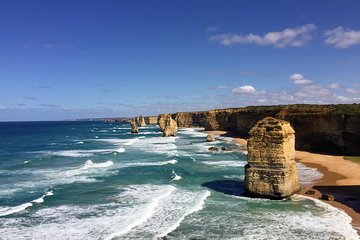 Great Ocean Road Reverse Itinerary Boutique Tour - Max 12 GuestsFree cancellationInstant confirmation
About this experience
HIGHLIGHTS: Are you the kind of person that enjoys losing your breath sometimes? Are you ready for the beauty of this storm-carved coastline? If you said yes, you're ready to join us on this multi-awarded Great Ocean Road Small Groups Tour! One of the best aspects of this tour…
from £74.47Book on Viator → Puffing Billy And Phillip Island Penguin Parade Bus TourFree cancellationInstant confirmation
About this experience
After being picked up from a convenient central Melbourne CBD location in air-conditioned comfort on this full-day tour, your first stop will be the picturesque Emerald Lake in the beautiful Dandenong Ranges where you will have the opportunity to purchase your own lunch and…
from £116.55Book on Viator → Melbourne: Yarra Valley Wine, Gin, Whisky and Chocolate TourFree cancellationInstant confirmation
About this experience
WE HAVE THOUSANDS OF FIVE STAR REVIEWS! We operate 7 days a week without fail! And it is a great thing to do if you are in Melbourne and it is raining all day! After years of providing private group tours for friends, family and businesses, we realised how much we love to…
from £69.61Book on Viator → Full-Day Phillip Island Tour with Kangaroo, Koala and Penguin ParadeFree cancellationInstant confirmation
About this experience
Every night at sunset, the truly incredible spectacle of the Penguin Parade occurs on the beaches of Phillip Island. The local colony of little penguins emerges from the water to make their way to the burrows in the sand dunes - and this tour is your chance to witness this…
from £75Book on Viator → Full-Day Great Ocean Road and 12 Apostles TourFree cancellationInstant confirmation
About this experience
Embark on an unforgettable one-day adventure along Australia’s Great Ocean Road, where stunning ocean views, lush rainforests, and fascinating history await. Start with a scenic drive to the road's eastern end. Enjoy a sweet treat at The Chocolateries, stop for a photo at the…
from £53.42Book on Viator →
Experiences are sold and operated by Viator and its local suppliers. Head Your Way is an affiliate: we may earn a commission, but your booking, payment, cancellations, refunds and any insurance are handled entirely by Viator under their terms. Head Your Way is not the seller and is not a party to your booking. Prices and availability shown are from Viator and can change — confirm full details on Viator before booking.
Neighbourhoods to explore
The Greek Precinct represents one of Melbourne's established cultural areas, reflecting Greek settlement and community life. Chinatown serves as the historic centre of Chinese migration and culture within the city. Little Italy similarly concentrates Italian heritage, businesses, and dining. Koreatown reflects more recent Korean settlement and commercial activity. Together, these neighbourhoods show Melbourne's multicultural composition through their streetscapes, restaurants, shops, and community institutions.
Southbank has become a significant cultural and leisure precinct, hosting major galleries, museums, theatres, and public spaces alongside dining and retail. It functions as a distinct district within the broader city, accessible and walkable for visitors seeking cultural programming.
The East End Theatre District clusters theatrical venues in a particular zone, making it a focal point for performing arts. Batman's Hill and Jolimont are residential and mixed-use areas offering different perspectives on how Melburnians live outside the central commercial zones.
Docklands has undergone transformation as a waterfront precinct combining residential, commercial, and entertainment uses. Westgarth provides another neighbourhood character, distinct from both the central precincts and the outer districts.
Altson's Corner, whilst primarily a historic site rather than a neighbourhood proper, marks another layer of the city's built heritage. The State Government Offices similarly represent civic and administrative functions within Melbourne's structure.

When to visit
Melbourne's climate information is limited in available data, so visitors should research seasonal conditions before travel. The city operates year-round as a cultural and commercial centre, with venues and markets functioning throughout the year. Events, festivals, and sporting fixtures occur across different seasons, so timing may depend on what particular activities or occasions interest you.
The city's theatres, galleries, and museums offer consistent programming regardless of season. Markets operate on regular schedules. Outdoor spaces like the Royal Botanic Gardens and Yarra Park can be visited at any time, though weather conditions will vary.

Getting there
Three airports serve Melbourne. Melbourne Airport is the primary international and domestic gateway, located 19.4 kilometres from the city centre. Melbourne Essendon Airport lies 11 kilometres away, whilst Melbourne Moorabbin Airport is 21.8 kilometres distant. Visitors arriving by air will need to arrange ground transport from whichever airport they use.
The city is accessible by road and rail, with services connecting to other Victorian cities and beyond. Once in the region, visitors can reach Melbourne's neighbourhoods and attractions via public transport or private hire.
Find flights to Melbourne →arrives MEB (11 km away)

Getting around
Melbourne's size—nearly 10,000 square kilometres—means different areas suit different transport methods. The central business district and nearby cultural precincts like Southbank are walkable. Markets like Queen Victoria Market and South Melbourne Market are accessible on foot within their respective areas.
Public transport connects neighbourhoods and attractions. The city centre is compact enough for walking between major landmarks, though reaching peripheral attractions or distant neighbourhoods requires planning. Visitors should assess distances and their mobility when deciding how to explore different areas.
Rideshare, taxi, and rental car options exist for those preferring private transport. Walking tours of particular neighbourhoods or precincts allow visitors to explore areas at leisure.

Day trips and nearby areas
Several destinations lie within reasonable distance for day visiting. Geelong sits 64.5 kilometres away, whilst Ballarat is 101.8 kilometres distant—both cities in Victoria with their own attractions and character. Closer options include the City of Port Phillip, just 3.1 kilometres away, providing seaside alternatives to the city centre.
Several districts surround Melbourne: Reservoir lies 11.3 kilometres north, Glen Waverley 19.1 kilometres east, Point Cook 21.8 kilometres south-west, Craigieburn 23.8 kilometres north, and Tarneit 26.8 kilometres west. These areas represent suburban and outer-metropolitan zones that visitors can explore depending on their interests and available time.
Day trips allow visitors to experience Victoria beyond central Melbourne whilst remaining based in the city. The varying distances mean some trips suit a few hours, whilst others warrant a full day away from the city centre.

Practical information
Melbourne uses Australian Eastern Time (Australia/Melbourne timezone) and the Australian Dollar (AUD) as currency. English is the primary language spoken throughout the city.
The official Visit Melbourne website (visitmelbourne.com) provides current information on attractions, events, accommodation, and services. This resource is worth consulting for up-to-date details on opening hours, pricing, and programming at museums, galleries, theatres, and markets.
Visitors should note that many attractions and neighbourhoods mentioned here require individual research for specific visiting details. Some sites charge entry fees, others are free. Performance venues require advance booking for shows. Markets operate on particular days and hours. Museums and galleries have seasonal or day-specific closures.
The city's size and multicultural character mean diverse services, accommodation, and dining options exist throughout different neighbourhoods. Researching particular precincts before visiting helps match accommodation and dining to specific interests or attractions you plan to visit.


Where to stay in Melbourne
Hotels are booked on Booking.com (a third party, off this page). You book and pay them directly — Head Your Way is not the seller.
Getting around Melbourne
Affiliate links — we may earn a commission, never at extra cost to you.
Common questions
- What are Melbourne's main attractions?
- Melbourne's key sites include Queen Victoria Market and South Melbourne Market for shopping and food; Old Melbourne Gaol, Old Treasury Building, and Cooks' Cottage for heritage; the National Gallery of Victoria, Melbourne Museum, ACMI, and Immigration Museum for cultural programming; multiple theatres (Arts Centre Melbourne, Her Majesty's Theatre, Comedy Theatre, Princess Theatre, Malthouse Theatre) for performance; and sporting venues like the Melbourne Cricket Ground, Marvel Stadium, and tennis facilities. Neighbourhoods like Southbank, Chinatown, the Greek Precinct, and Little Italy offer distinct characters and experiences.
- Which airports serve Melbourne?
- Three airports serve the city: Melbourne Airport (MEL), the primary gateway 19.4 kilometres away; Melbourne Essendon Airport (MEB), 11 kilometres from the centre; and Melbourne Moorabbin Airport (MBW), 21.8 kilometres away. Visitors will need to arrange ground transport from their arrival airport to the city.
- What neighbourhoods should I visit?
- Melbourne's neighbourhoods each offer distinct experiences. The Greek Precinct, Chinatown, Little Italy, and Koreatown reflect different cultural communities. Southbank is a major cultural and leisure precinct. The East End Theatre District clusters performance venues. Docklands, Jolimont, Westgarth, and Batman's Hill offer residential and mixed-use character. Each neighbourhood has different shopping, dining, and cultural attractions.
- How far are nearby cities?
- Geelong lies 64.5 kilometres away, whilst Ballarat is 101.8 kilometres distant. The City of Port Phillip is just 3.1 kilometres away, making it a quick trip. Various suburban and outer-metropolitan districts like Reservoir, Glen Waverley, Point Cook, Craigieburn, and Tarneit lie between 11 and 27 kilometres from the city centre, suitable for day visits.
- Is Melbourne walkable?
- The city centre and nearby cultural precincts like Southbank are walkable and compact. However, Melbourne covers nearly 10,000 square kilometres, so reaching distant neighbourhoods or attractions requires planning and transport. Markets, theatres, galleries, and major landmarks in central areas are accessible on foot, but visitors exploring multiple precincts will need to use public transport, rideshare, or other options.
- What religious and cultural sites can I visit?
- Melbourne has diverse religious architecture. Christian sites include Saint Paul's Cathedral, Collins Street Baptist Church, Scots Church, St Michael's Uniting Church, Wesley Uniting Church, and Saint James Old Cathedral. The Melbourne City Synagogue serves the Jewish community. Cultural neighbourhoods like Chinatown, the Greek Precinct, Little Italy, and Koreatown contain community institutions, markets, restaurants, and shops reflecting their respective heritages.
On the map
Keep exploring
More places in Australia
Similar destinations
Plan the wider trip
Sources & method
- GeoNames — population · retrieved 2026-08-14
- OurAirports (derived) — nearestAirports · retrieved 2026-08-14
- Imagery — commons
Data compiled 2026-08-14 · editorial checks: passed. See our methodology for how Head Your Way sources and reviews travel data.