Bogotá
city · Colombia
Overview
Bogotá is Colombia's capital and largest city, positioned in the Andes at a significant elevation that shapes its temperate climate and landscape. Home to nearly 7.7 million people, it serves as the country's political, cultural and intellectual heart. The city holds UNESCO World Heritage status, reflecting its historical importance and architectural heritage.
As a major South American metropolis, Bogotá offers visitors a sophisticated blend of colonial history, world-class museums, religious architecture and urban culture. Its neighbourhoods range from the intimate historic streets of La Candelaria to contemporary commercial districts, each with distinct character. The city's high-altitude setting means temperatures remain cool year-round, making it accessible to visitors at any season.
Key facts
| Country | Colombia |
|---|---|
| Population | 7.67 million |
| Timezone | America/Bogota |
| Nearest airport | El Dorado International Airport (BOG), 12 km |
| Currency | COP |
History and context
Bogotá's origins trace to the colonial era, when Spanish settlers established a settlement on land inhabited by indigenous peoples. The city grew through the Baroque period as a centre of religious and administrative power, with its layout and principal structures reflecting colonial urban planning principles. Many of the churches and civic buildings that define the historic core date to this formative era.
The Primary Cathedral of Bogotá stands as a physical manifestation of this colonial heritage, its architecture and interior decoration embodying the religious and artistic priorities of the time. Nearby, the Plaza de Bolívar anchors the city's historic heart, serving as the ceremonial and political focus since colonial times. The National Capitol, also UNESCO-listed, represents the continuation of Bogotá's role as the seat of national governance.
Through the modern era, Bogotá has expanded considerably beyond its colonial core. The establishment of major cultural institutions—the Gold Museum, the Botero Museum, and the Museo Nacional de Colombia—reflects the city's evolution into a global cultural destination. Contemporary museums like the Museo de Arte Moderno de Bogotá show how the city continues to develop its intellectual and artistic infrastructure.
Things to do
The historic quarter of La Candelaria concentrates many of Bogotá's most significant sites within walking distance. The Plaza de Bolívar forms the symbolic centre, surrounded by the Primary Cathedral—a UNESCO site whose interior features colonial-era artwork and religious treasures—and the National Capitol. The museum dedicated to Colombian independence occupies the Casa del Florero, providing context for the nation's founding moment. Just steps away, the Museum of Colonial Art houses religious paintings and sculptures from the Spanish colonial period, displayed in a restored historic building that is itself UNESCO-protected.
Art and cultural collections anchor Bogotá's museum offerings. The Gold Museum presents the world's largest collection of pre-Hispanic gold objects, spanning centuries of indigenous craftsmanship. The Botero Museum showcases the work of a major Colombian artist alongside European masterpieces. The Museo Nacional de Colombia traces the country's artistic and cultural development across multiple floors. For those interested in design and contemporary practice, the Museo de Arte Moderno de Bogotá displays modern and contemporary works. The Planetario de Bogotá offers a different kind of cultural experience, engaging visitors with astronomy and space science.
Religious architecture extends beyond the colonial core. The Basílica del Sagrado Corazón de Jesús represents later ecclesiastical construction, with distinctive architectural features within the city's religious landscape. Santa Clara Church Museum preserves both the physical building and its artistic contents, allowing visitors to experience a functioning church as a cultural space. The Iglesia de la Concepción, Iglesia San Ignacio, and Nuestra Señora de Lourdes each contribute to the city's varied sacred spaces, some designated UNESCO sites for their historical and artistic significance.
Bogotá's civic and institutional buildings tell stories of government, finance and cultural production. The Teatro Colón, a UNESCO-listed performance venue, hosts theatrical and musical events within a historically significant building. The Avianca Building represents early-modern commercial architecture. The Luis Ángel Arango Library serves as both a research facility and cultural space. The Museo Casa de Moneda documents the history of Colombian currency within a UNESCO-protected structure. Those interested in academic and intellectual history might visit the Libre University of Colombia, the Caro and Cuervo Institute, and the Colombian Institute of Anthropology and History.
Green spaces and elevated vantage points offer respite and perspective. Guadalupe Hill provides views across the city and a destination for a longer walk. Cerro de Monserrate, accessible to visitors seeking higher elevation and panoramic views, draws both sightseers and those with spiritual motivations. The Parque Metropolitano Tercer Milenio and Parque de la Independencia provide more accessible urban green space for walking and relaxation. Parque Santander offers a smaller plaza experience in the heart of the city.
Specific neighbourhoods host particular attractions and experiences. The Teatro Faenza operates as a cultural venue in one of the city's established areas. The Estadio Nemesio Camacho El Campín serves football enthusiasts and those interested in Colombian sports culture. Plaza de Toros La Santamaría represents another aspect of traditional Colombian public life. Historical commercial spaces like the Antiguo Almacén La 14 and the Edificio Antiguo Telecom preserve earlier architectural and mercantile eras.
Experiences you can book in Bogotá
Before booking: The US State Department currently advise against non-essential travel to Colombia. Proceed only under your own judgement and check the official advice above.
 La Candelaria, Monserrate and Museums Bogotá Private City TourFree cancellationInstant confirmation
About this experience
Spend a whole day seeing it all: Colonial houses, fruits, coffee, drug trade and peace process, museums, the whole nine yards! With our private city tour you will have the most complete experiences one could have in Bogotá. Get personalized insights from our expert guide and…
from £45.14Book on Viator → Bogota Zipaquira Salt Cathedral Private Tour + LunchFree cancellationInstant confirmation
About this experience
On our Tour you will be able to see directly the only underground cathedral in the world located in Colombia, built 180m underground, it is a mega structure that deserves to be among the most impressive in our country and on the planet. The entire structure of this cathedral is…
from £41.94Book on Viator → Cheapest ZIPAQUIRA & GUATAVITA LAKE Visit 5 Top Sights w/PICKUPFree cancellationInstant confirmation
About this experience
We are Bogota Travel Experience, an agency with more than 8 years of experience, we are starting in this new app offering our successful tour to Zipaquira and Guatavita where you have the opportunity to visit 5 sights in one day, we pick you up at your accommodation. We are just…
from £44.39Book on Viator →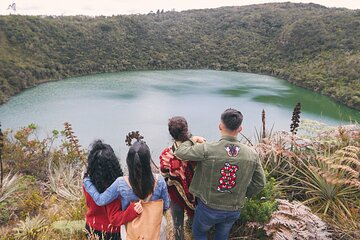 Shared Tour Zipaquirá Salt Cathedral and Guatavita LagoonFree cancellationInstant confirmation
About this experience
Leave Bogotá and immerse yourself in two of Colombia's most impressive places: the legendary Guatavita lagoon and the majestic Salt Cathedral of Zipaquirá. This full-day guided experience combines nature, mythology, engineering wonders, and Colombian culture, and includes…
from £43.64Book on Viator → Private City Tour Bogota + Monserrate, Gold, Botero and Candelaria.Free cancellationInstant confirmation
About this experience
If you travel to Bogotá, this is the best option to get to know, learn and enjoy its beauty and its history. This tour, accompanied by our expert guides, begins in an emblematic place: Monserrate hill. You will climb to more than 3100 m high and you will see the beautiful…
from £40.19Book on Viator → Bogota: Small Group Tour Zipaquira Salt Cathedral with PickupFree cancellationInstant confirmation
About this experience
Explore the world’s only Salt Cathedral, an underground wonder located 180 meters underground in Zipaquirá. This tour includes transportation from the hotel and time to enjoy a typical delicious lunch (does not include lunch). Discover a masterpiece carved out of salt from the…
from £34.95Book on Viator →
Experiences are sold and operated by Viator and its local suppliers. Head Your Way is an affiliate: we may earn a commission, but your booking, payment, cancellations, refunds and any insurance are handled entirely by Viator under their terms. Head Your Way is not the seller and is not a party to your booking. Prices and availability shown are from Viator and can change — confirm full details on Viator before booking.
Neighbourhoods to explore
La Candelaria forms Bogotá's historic and cultural nucleus. Its narrow streets, colonial facades and concentration of museums, churches and government buildings create an immersive experience of the city's past. Walking through La Candelaria reveals layers of history in the architecture and urban fabric, with the Plaza de Bolívar serving as its natural centre.
Las Cruces offers a different urban character, with its own architectural personality and local atmosphere distinct from the tourist-focused historic quarter. Exploring this neighbourhood provides insight into how Bogotá's neighbourhoods developed and function as living communities rather than museum districts.
Olaya represents a different urban zone, with its own commercial and residential character. This neighbourhood reflects how the city has grown beyond its colonial core into contemporary urban patterns and modern development.
The CAN neighbourhood clusters several major institutions and attractions, making it a logical destination for visitors interested in museums, parks and cultural venues in one area. The Museo Nacional de Colombia and Parque Metropolitano Tercer Milenio anchor this zone.
The central Bogotá neighbourhood encompasses commercial and mixed-use areas, representing the city's contemporary urban life. Streets like Carrera 22 (San Façon) host commercial activity and street-level culture that complements visits to formal attractions.
When to visit
Bogotá's climate remains mild year-round due to its high-altitude location. September stands out as the warmest month, with average temperatures around 16°C and highs reaching approximately 20.4°C. July is the coolest month, with average temperatures near 15°C and lows around 10.7°C. These temperature ranges mean visitors should pack layers regardless of season, as mornings and evenings cool noticeably.
Rainfall varies seasonally but occurs throughout the year. March is the wettest month, when outdoor activities may be affected by rain. August is the driest month, favouring outdoor exploration. However, the city's museums, galleries and indoor attractions make it accessible even during rainy periods.
The best months for visiting, considering both weather and crowd patterns, are September, February, August and January. These months offer drier conditions and relatively stable temperatures, allowing comfortable exploration of both indoor attractions and outdoor spaces like Parque Santander and Parque Metropolitano Tercer Milenio.
Getting there
El Dorado International Airport (BOG) is Bogotá's principal airport, situated roughly 12.5 kilometres from the city centre. Most international flights operate from here, and road connections to the city are well-developed.
Vanguardia Airport (VVC) operates approximately 71.5 kilometres from the city, serving as an alternative but less frequently used arrival point for some services.
From either airport, visitors can reach central Bogotá by taxi, ride-sharing apps or shuttle services. The journey from El Dorado typically takes 20 to 40 minutes depending on traffic conditions and destination within the city.
Before booking: The US State Department currently advise against non-essential travel to Colombia. Proceed only under your own judgement and check the official advice above.
Flights from £688 to Bogotá →from London · arrives BOG (12.5 km away) · recently-found fare — price & availability change
Getting around
Bogotá is a large city spread across 1,578 square kilometres, making navigation require planning. The historic La Candelaria neighbourhood is compact and best explored on foot, with most major colonial-era attractions within walking distance of Plaza de Bolívar.
For distances beyond the historic core, visitors rely on taxis, ride-sharing applications, or local buses. Ride-sharing apps operate throughout the city and provide a reliable option for travelling between neighbourhoods like Las Cruces, Olaya, and the CAN zone where institutions cluster.
Walking remains the best way to experience individual neighbourhoods and discover street-level details. The city's layout and topography (including slopes toward Guadalupe Hill and Cerro de Monserrate) mean some areas are more challenging to traverse on foot than others, so sensible footwear and awareness of elevation changes is advisable.
Day trips and nearby destinations
Several towns within the Cundinamarca Department offer half-day or day-trip possibilities from Bogotá. Soacha lies approximately 15.3 kilometres south, making it easily accessible for a brief excursion. Mosquera, situated 19.6 kilometres away, provides another nearby option. Funza is located 18.7 kilometres from the city.
Madrid and Chía are positioned 24.4 and 27.8 kilometres respectively from Bogotá, within range for a day's exploration. Facatativá, at 37.8 kilometres, represents a slightly longer journey but remains feasible as a day destination. Zipaquirá, 46.6 kilometres away, offers a more extended excursion from the city.
For a more substantial day trip, Villavicencio lies approximately 73.3 kilometres from Bogotá, representing the farthest of the commonly visited nearby destinations. Each of these towns offers distinct character and experiences beyond what the capital provides, allowing visitors to explore the wider region while based in Bogotá.
Good to know
Bogotá observes Colombian holidays and cultural events throughout the year, including the Bogota International Film Festival, which draws cinema enthusiasts and industry professionals. Checking the city's official website at bogota.gov.co provides current information about events, attractions and services.
The city operates on Colombia Standard Time (America/Bogota timezone) and uses the Colombian Peso (COP) as currency. Spanish is the primary language spoken; visitors with limited Spanish may find English spoken in tourist-oriented establishments but should not assume it elsewhere.
As a UNESCO World Heritage city, Bogotá's historic core is actively preserved, with ongoing restoration and conservation efforts visible throughout La Candelaria. This status reflects international recognition of the city's cultural and historical significance. The high altitude means visitors not accustomed to elevation may need time to adjust, especially during the first day of arrival.
Journeys through here
Where to stay in Bogotá
Hotels are booked on Booking.com (a third party, off this page). You book and pay them directly — Head Your Way is not the seller.
Getting around Bogotá
Before booking: The US State Department currently advise against non-essential travel to Colombia. Proceed only under your own judgement and check the official advice above.
Affiliate links — we may earn a commission, never at extra cost to you.
Common questions
- What is the best time of year to visit Bogotá?
- September, February, August and January are considered the best months, offering drier conditions and stable temperatures averaging around 15–16°C. The city remains accessible year-round, though March is the wettest month and August the driest.
- How do I get from El Dorado Airport to the city centre?
- El Dorado International Airport is located 12.5 kilometres from central Bogotá. Visitors can reach the city by taxi, ride-sharing applications or shuttle services, typically taking 20 to 40 minutes depending on traffic and destination.
- What are the main museum attractions in Bogotá?
- Key museums include the Gold Museum (pre-Hispanic gold objects), the Botero Museum (contemporary and European works), the Museo Nacional de Colombia (national artistic and cultural history), the Museum of Colonial Art (religious paintings and sculptures), the Museo de Arte Moderno de Bogotá (modern and contemporary art), and the Planetario de Bogotá (astronomy and space science).
- Is La Candelaria walkable?
- Yes, La Candelaria is compact and best explored on foot. The historic quarter concentrates the Primary Cathedral, Plaza de Bolívar, the National Capitol, and numerous museums within walking distance, making it ideal for day-long exploration without transport.
- What UNESCO sites does Bogotá have?
- Bogotá holds UNESCO World Heritage status as a city. Specific UNESCO-listed sites within it include the National Capitol, the Primary Cathedral, the Museum of Colonial Art, St. Bartholomew Major College, Teatro Colón, the Museo Casa de Moneda, the Iglesia de la Concepción, Iglesia San Ignacio, Santa Clara Church Museum, the Plaza de Bolívar, and the Museo de la Independencia Casa del Florero.
- What is Cerro de Monserrate?
- Cerro de Monserrate is a landmark accessible to visitors seeking higher elevation and panoramic views across Bogotá. It attracts both sightseers and those with spiritual motivations, providing perspective on the city's geography and scale.
On the map
Keep exploring
Nearby places
More places in Colombia
Similar destinations
Plan the wider trip
Sources & method
- GeoNames — population · retrieved 2026-08-14
- OurAirports (derived) — nearestAirports · retrieved 2026-08-14
Data compiled 2026-08-14 · editorial checks: passed. See our methodology for how Head Your Way sources and reviews travel data.