
Overview
Beijing is China's capital, a sprawling city of over eighteen million people spread across a vast administrative area, and a place where imperial history sits within a few minutes' walk of modern government buildings and busy shopping streets. Its status as a UNESCO World Heritage city reflects the extraordinary concentration of historic palaces, temples and ceremonial spaces at its centre.
At the heart of the city lies a former imperial palace complex, guarded by grand gates and surrounded by parks, altars and ancestral halls that once served the ruling court. Around this core, subdistricts with names rooted in old Beijing life still structure the city today, even as museums, concert venues and modern institutions have filled in the gaps between the historic monuments.
This is a city best explored on foot and by public transport, moving between walled courtyards, wide ceremonial squares and quieter religious sites, with the surrounding region offering straightforward day trips into neighbouring cities and towns.
Key facts
| Country | China |
|---|---|
| Population | 18.96 million |
| Timezone | Asia/Shanghai |
| Nearest airport | Beijing Capital International Airport (PEK), 25 km |
| Currency | CNY |
Things to do
The obvious centre of any visit is the former imperial palace complex, referred to in the facts as both 故宫 and 故宫博物院, now run as a museum. Entry from the south passes through a sequence of historic gates, including 天安门, 端门 and 午门, before opening into the palace's ceremonial core. Within the walls stand the great halls used for state occasions, among them 太和殿, the throne hall reached through 太和门, and 保和殿, its counterpart deeper inside the complex. Further in, the private quarters of the court are marked by 乾清宫, 交泰殿 and 坤宁宫, connected by the gate of 乾清门, while 宁寿宫 formed a separate residential complex within the same walls. The palace is bounded by its own moat, 筒子河, and by the northern gate of 神武门, with 新华门 marking another historic entrance associated with the complex.
Just south of the palace, 天安门广场 is one of the largest ceremonial squares in the city and is flanked by significant modern monuments and institutions. 人民英雄纪念碑 stands at its centre, while 毛主席纪念堂 and 中国国家博物馆 sit along its edges, the latter offering a large-scale museum of Chinese history and culture. To the south again, 正阳门, an old city gate, now also houses 中国铁道博物馆(正阳门展馆), giving visitors a chance to combine a historic gate with a museum of railway history in one stop.
Beijing's religious and ceremonial architecture extends well beyond the palace walls. 天坛公园 is a major landmark park built around temple structures used for imperial rites, and remains one of the city's key green and historic spaces. 太庙, an ancestral temple, and 社稷坛, an altar complex now set within 中山公园, both speak to the ceremonial functions that surrounded the throne. Religious life is also represented by 雍和宫, a landmark temple complex, by 智化寺, a monument-listed temple, by 东岳庙, and by 普度寺, all offering different flavours of Beijing's religious architecture, alongside 王府井天主堂, a church reflecting the city's Christian heritage.
For a broader sense of the city's layout and identity, 北京市规划展览馆 sets out Beijing's urban planning story, while 北平图书馆旧址 recalls the city's earlier library institutions. History of a more specific kind is covered at 北京警察博物馆, a museum dedicated to policing history, and at 法国使馆旧址, the former French legation site, a reminder of Beijing's era of foreign diplomatic missions. Naturalists and science-minded visitors can head to 国家自然博物馆 and 中国地质博物馆, two museums covering natural history and geology respectively.
Green space and water complete the picture. 北海公园 is a large historic park built around a lake, offering a quieter counterpoint to the palace crowds, while remnants of the old city defences survive at 明城墙, a stretch of Ming-era wall worth seeking out for a sense of the city's original fortifications. For music and performance, 中山公园音乐堂 provides a concert venue set within the grounds of 中山公园 itself, combining greenery with a cultural programme.


Experiences you can book in Beijing
 All-Inclusive Tour: Tiananmen Square, Forbidden City, Great WallFree cancellationInstant confirmation
About this experience
This day highlight tour will show you 3 most popular and must see attractions in Beijing, including Tiananmen Square, Forbidden City(Note: The Forbidden City closes every Monday. If your tour date lands on a Monday, we will visit Jingshan Hill instead, where you can enjoy a full…
from £70.04Book on Viator → Beijing Private Tour: 2 Days Forbidden City and Mutianyu Great Wall VIP TourFree cancellationInstant confirmation
About this experience
Spend two full days to see the UNESCO-listed top Beijing attractions: Tiananmen Square, Forbidden City, Mutianyu Great-wall, Temple of heaven, Summer palace, fun Hutong rickshaw tour. A famous peking roast duck, trout fish feast is an unmissable experience at Beijing.…
from £277.91Book on Viator → Beijing: Mutianyu Great Wall Private TourFree cancellationInstant confirmation
About this experience
Visit the Great Wall of China at Mutianyu, It's UNESCO World Heritage sites. The Great Wall of China is one of the most popular attractions in China, yet the Mutianyu section attracts fewer visitors, which means you get a less crowded experience of this world-famous landmark.
from £60.19Book on Viator → All-inclusive Day Tours: Tiananmen Sq, Forbidden City, Great WallFree cancellationInstant confirmation
About this experience
Spend a full day with an expert local guide to uncover Beijing’s imperial heritage: Tiananmen Square, the Forbidden City, and the Mutianyu Great Wall. Relax with seamless hotel pick-up and drop-off, and rest assured with no surprise add-ons. Every essential is fully covered,…
from £73.73Book on Viator →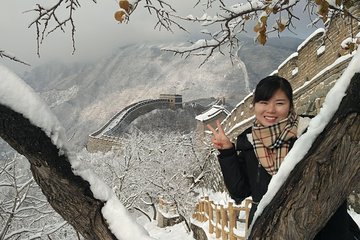 Beijing: Mutianyu Great Wall Chairlift Up & Down or Toboggan DownFree cancellationInstant confirmation
About this experience
Explore one of the Seven Wonders of the World on this unforgettable full-day group tour from Beijing. With a flexible duration of 6–9 hours, you’ll have plenty of time to fully enjoy the Great Wall at a relaxed pace. Your professional guide and driver will pick you up in the…
from £58.68Book on Viator → Forbidden City&T-Square Small GroupTours w/ ticket(Eng/Esp Guide)Free cancellationInstant confirmation
About this experience
Cover Beijing's Central Axis in one trip with in-depth narrations of 600 years of imperial history, the Palace Museum’s architecture and treasures.This intimate tour is designed to be a hassle-free and deeply cultural journey into China's imperial heart. Multiple tour packages…
from £12.04Book on Viator →
Experiences are sold and operated by Viator and its local suppliers. Head Your Way is an affiliate: we may earn a commission, but your booking, payment, cancellations, refunds and any insurance are handled entirely by Viator under their terms. Head Your Way is not the seller and is not a party to your booking. Prices and availability shown are from Viator and can change — confirm full details on Viator before booking.
Neighbourhoods to explore
前门街道, just south of the ceremonial square area, takes its name from the historic gate nearby and has long been one of the city's key commercial and pedestrian districts, a natural base for exploring the monuments around the square and the old gate itself.
东华门街道 and 景山街道 sit close to the palace complex on its eastern and northern sides, placing visitors within easy reach of the palace gates and the parks that ring the old imperial core.
西长安街街道 covers the area along the wide avenue west of the ceremonial square, a district shaped by government buildings and formal civic architecture, useful as an orientation point for the square, the palace and nearby ministries.
大栅栏街道, adjoining the 前门 area, is one of the city's older commercial subdistricts, historically associated with shops and trade rather than palace ceremony, and it rewards those keen to see a different, more mercantile side of central Beijing.
Further out, Yuetan Subdistrict, Guanganmennei Subdistrict, Xinjiekou Subdistrict, Taoranting Subdistrict and Fangzhuang Subdistrict spread across the wider city, each functioning as a residential and local commercial area away from the dense monument core, useful for a sense of everyday Beijing life beyond the historic centre.

History and context
Beijing's identity is built above all around its imperial-era core, the huge palace complex at the city's centre that functioned as the seat of the court and remains the anchor of the historic city. The sequence of gates and halls running from 天安门 through to 神武门 reflects the layered, ceremonial planning typical of the imperial period, with distinct halls for state business, private residence and ancestral rites laid out along a formal axis.
Ceremonial and religious life extended outward from the palace in the same period, producing the ritual complexes of 天坛公园 and 社稷坛, and the ancestral temple of 太庙, all built to support the rites that legitimised imperial rule. Religious institutions such as 雍和宫, 智化寺 and 东岳庙 added further layers of temple architecture across the city during the same broad era.
The modern era reshaped the area immediately south of the palace, turning it into the vast ceremonial square now flanked by 人民英雄纪念碑, 毛主席纪念堂 and 中国国家博物馆, monuments and institutions that speak to twentieth-century political history rather than the earlier imperial one. Diplomatic history of a different kind survives at the 法国使馆旧址, a former foreign legation site, while the surviving stretch of 明城墙 offers a physical trace of the old city's defensive walls, and 北平图书馆旧址 recalls the city's early modern civic institutions.


When to visit
Beijing has a strongly seasonal climate, with July as both the warmest and wettest month, when summer highs reach around 32.2°C and the average sits at 25.9°C, alongside the year's heaviest rainfall. Winters are cold and dry by comparison: January is the coolest month, with lows averaging -9.5°C and a winter average of -4.4°C, while December is the driest month of the year.
Across the year, Beijing's mean high sits at 18.4°C and its mean low at 6.9°C, underlining just how wide the swing is between its hot, wet summers and its cold, dry winters. Visitors should plan around this contrast: summer brings heat and rain together, while winter offers dry but distinctly cold conditions, and layering or timing a visit around the shoulder months between these extremes is worth considering given the scale of the seasonal shift.

Getting there
Beijing is served by two major international airports. Beijing Capital International Airport (PEK) is the closer of the two, around 25.4 km from the city, while Beijing Daxing International Airport (PKX) lies about 45.2 km out and handles a growing share of both domestic and international traffic. A third option, Tianjin Binhai International Airport (TSN), sits roughly 119.2 km away in neighbouring Tianjin and can also serve as a gateway for those combining a Beijing visit with travel into the wider region.
Flights from £423 to Beijing →from London · arrives PEK (25.4 km away) · recently-found fare — price & availability change

Getting around
The historic centre around the former palace, the ceremonial square and the surrounding subdistricts is compact enough to explore largely on foot once you're there, with gates, halls, parks and temples clustered closely together. Moving between subdistricts such as 前门街道, 东华门街道, 景山街道 and 西长安街街道 is straightforward given how tightly the historic core is packed, while reaching the outer residential subdistricts like Fangzhuang or Xinjiekou requires a longer cross-city journey given Beijing's overall size and population spread across more than sixteen thousand square kilometres.

Day trips
Beijing's surrounding region offers a spread of nearby cities and towns well suited to day trips. Daxing, at around 19.5 km, and Tongzhou, at about 22.6 km, are the closest options, both easily reached given their proximity to the capital. Mentougou lies about 26.2 km out, and Shunyi around 32.0 km, offering further alternatives within a similar range.
A little further afield, Fangshan sits roughly 42.1 km away, while Langfang is about 50.9 km and Sanhe around 57.8 km from the city, both worth considering for a longer day out. The most substantial nearby destination is Tianjin, a major city in its own right some 108.2 km from Beijing, making it a viable, if longer, day trip for those wanting to see beyond the capital.

Good to know
Beijing sits within the Asia/Shanghai time zone, and the currency in use throughout the city is the Chinese yuan (CNY). Chinese is the language spoken across the city, and having key place names ready, particularly for the historic sites clustered around the old palace complex, is genuinely useful given how closely packed and similarly named many of the gates and halls are.
Given the scale of the seasonal temperature swing, from summer highs around 32.2°C to winter lows near -9.5°C, packing appropriately for the season of travel matters more in Beijing than in many other cities, and the July peak in rainfall is worth bearing in mind for anyone visiting the outdoor ceremonial parks and temple grounds at that time of year.
Journeys through here
Where to stay in Beijing
Hotels are booked on Booking.com (a third party, off this page). You book and pay them directly — Head Your Way is not the seller.
Getting around Beijing
Affiliate links — we may earn a commission, never at extra cost to you.
Common questions
- What is the main historic site to visit in Beijing?
- The former imperial palace complex, known in the facts as 故宫 or 故宫博物院, forms the heart of historic Beijing, with a sequence of gates and halls including 天安门, 太和殿 and 神武门 leading visitors through the old ceremonial and residential quarters of the court.
- Is Beijing's historic centre a UNESCO World Heritage site?
- Yes, Beijing carries UNESCO World Heritage status, reflecting the significance of its historic core, including the palace complex and the ceremonial and religious architecture built around it.
- Which airport is closest to central Beijing?
- Beijing Capital International Airport (PEK) is the nearest, at around 25.4 km from the city, followed by Beijing Daxing International Airport (PKX) at about 45.2 km, with Tianjin Binhai International Airport (TSN) further away at roughly 119.2 km.
- What is Beijing's climate like?
- Summers are hot and wet, with July as both the warmest and wettest month, reaching highs around 32.2°C. Winters are cold and dry, with January the coolest month, averaging lows of -9.5°C, and December the driest month of the year.
- What day trips are possible from Beijing?
- Nearby options include Daxing, Tongzhou, Mentougou and Shunyi, all within about 32 km, plus slightly further destinations such as Fangshan, Langfang and Sanhe, and the larger city of Tianjin, roughly 108.2 km away, for a longer day out.
- Can Beijing's main sights be explored on foot?
- The historic core, including the palace complex, the ceremonial square and the surrounding parks and temples, is densely clustered and walkable, though reaching outer residential subdistricts requires longer cross-city travel given Beijing's overall size.
On the map
Keep exploring
Nearby places
More places in China
Similar destinations
Plan the wider trip
Sources & method
- GeoNames — population · retrieved 2026-08-14
- OurAirports (derived) — nearestAirports · retrieved 2026-08-14
- Imagery — commons
Data compiled 2026-08-14 · editorial checks: passed. See our methodology for how Head Your Way sources and reviews travel data.